



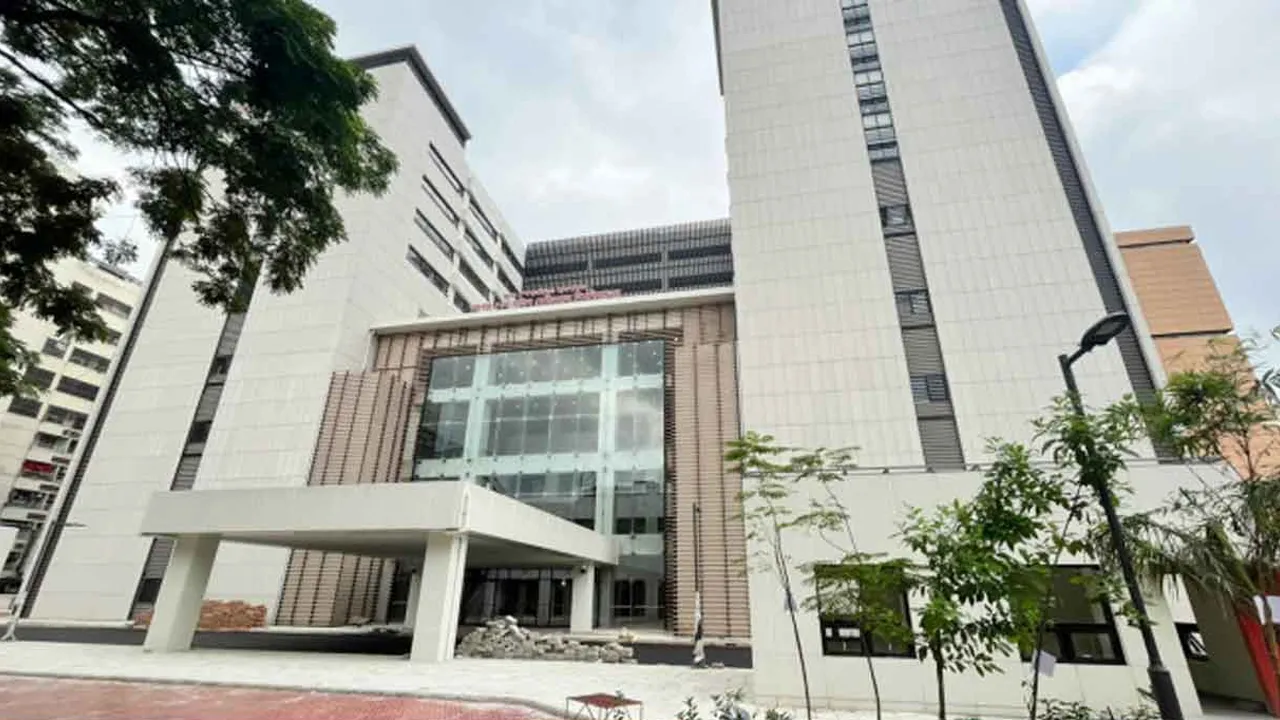
The government is moving toward a major transformation of Bangladesh’s healthcare system to ensure access to advanced medical treatment, with the Bangladesh Medical University (BMU) Super Specialized Hospital set to introduce a one-stop emergency service model similar to those used by Singapore’s Mount Elizabeth Hospital and Thailand’s Bumrungrad International Hospital.
The hospital is expected to become fully operational within the next two to three months. It will be run through a private limited company, with a separate board of directors to be formed soon. Employees appointed to the hospital will not be allowed to engage in private practice.
Prof Dr Saif Ullah Munshi, director of the Super Specialized Hospital, said he hoped to make the facility fully operational within two to three months.
“We hope to fully operationalise the hospital within the next two to three months. It will be managed through a private limited company,” he said.
According to the hospital authorities, the BMU vice-chancellor will serve as chairman of the company, while a pro-vice-chancellor is planned to be appointed as managing director.
An experienced professional from outside the university with expertise in managing corporate hospitals will also be appointed as chief executive officer (CEO).
Security, cleaning and other support services will be outsourced through competitive tenders to competent service providers.
The hospital will not use BMU’s existing doctors and nurses. Doctors, nurses and other staff will be recruited from outside. Existing government employees will also be allowed to join the hospital if they resign from their government positions.
The authorities are also considering barring doctors from private practice outside the hospital. In return, they plan to offer competitive salaries and other financial benefits through the hospital.
Prof Dr Abul Kalam Azad, BMU pro-vice-chancellor for administration, said the university’s syndicate meeting would be held on October 8, after which the process of appointing a CEO would begin as quickly as possible.
“We will launch the Super Specialized Hospital as soon as possible. However, it will have to be opened in phases because several parts of the hospital require renovation. We want to complete everything in accordance with the rules,” he said.
To facilitate management of the hospital and expand medical education, research and healthcare services, the Bangladesh Medical University (Second Amendment) Bill, 2026, was passed by Parliament on July 13.
The statement of objectives and reasons for the bill said BMU was established under the Bangladesh Medical University Act, 1998, to ensure advanced medical education, research and improved healthcare services in the country.
According to BMU officials, the Super Specialized Hospital will operate as a private limited company in which the university will hold a 90% stake and the government 10%.
The corporate structure is intended to provide the hospital with administrative and financial autonomy and make it easier to recruit qualified and skilled doctors by offering competitive salaries.
The officials hope that once the hospital becomes fully operational, it will help reduce the tendency among Bangladeshis to travel abroad for specialised medical treatment.
Earlier, at a BMU syndicate meeting on May 11, a seven-member committee was formed to oversee the full operation of the hospital and resolve outstanding issues. Prof Dr Abul Kalam Azad was appointed convener of the committee, while Prof Dr Saif Ullah Munshi was made member secretary.
The hospital has five specialised centres designed to provide advanced medical services: the Cardio and Cerebrovascular Centre, Hepatobiliary and Liver Transplant Centre, Maternal and Child Health Centre, Kidney Disease and Urology Centre, and Emergency and Trauma Centre.
The facility also has 14 operating theatres, a 100-bed intensive care unit, a 100-bed emergency unit, six VVIP cabins, 22 VIP cabins and 25 deluxe cabins.
Instead of permanent recruitment, all personnel will be hired on a contractual basis through competitive examinations, with the aim of recruiting skilled professionals from Bangladesh and abroad.
Built at a cost of Tk 1,868 crore, the 750-bed hospital was inaugurated in September 2022. However, dedicated manpower has yet to be appointed for the facility.
At present, limited services are being provided using BMU’s existing staff and budget.

