



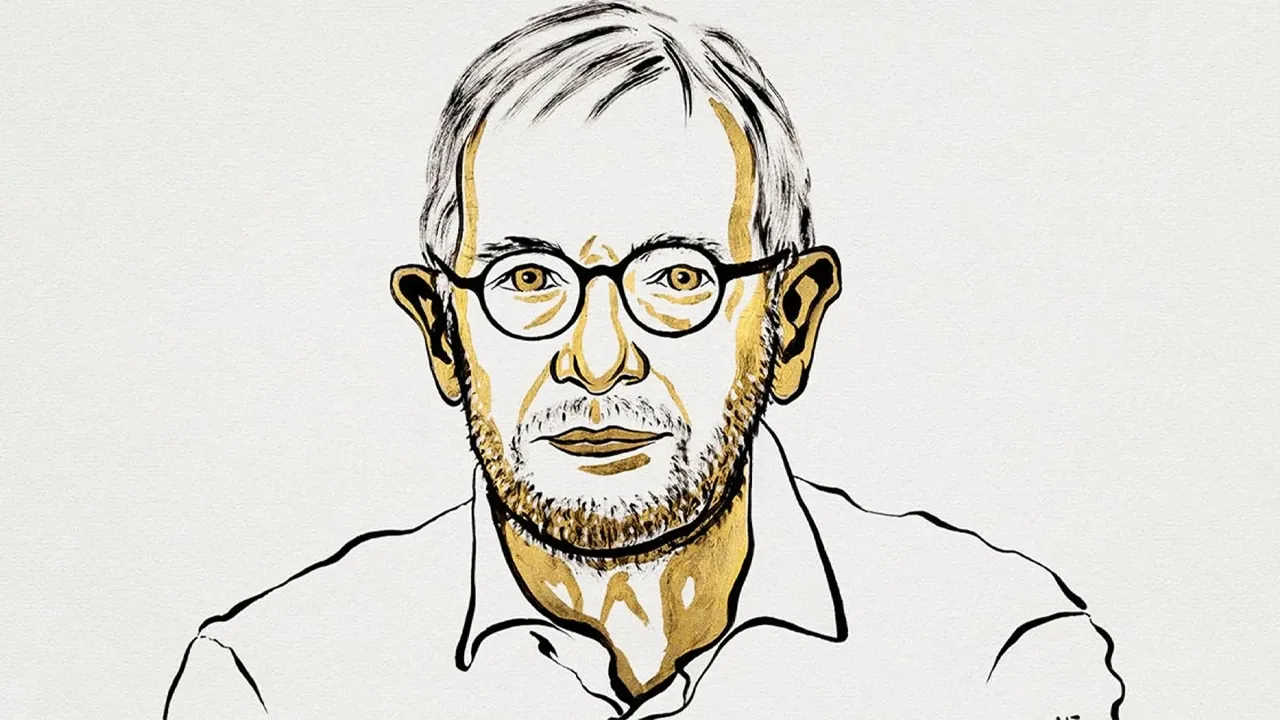
Belgian-born American physicist Francis Halzen has been awarded the 2026 Nobel Prize in Physics for his decisive contributions to the IceCube Neutrino Observatory and his role in the discovery of high-energy neutrinos of astrophysical origin.
The Royal Swedish Academy of Sciences announced the award in Stockholm on Tuesday, October 6.
Halzen is a professor at the University of Wisconsin-Madison. Born in Belgium, he currently conducts research at the intersection of particle physics, astrophysics and space science. He has worked in the university’s Department of Physics since 1972.
Halzen is the principal investigator of the IceCube Neutrino Observatory. The project began in the late 1980s under his initiative. The neutrino detector was built using about one cubic kilometre of ice at the South Pole in Antarctica.
IceCube has enabled scientists to detect high-energy neutrinos originating from cosmic sources.
Neutrinos are electrically neutral elementary particles that can travel at nearly the speed of light and cross enormous distances through space before reaching Earth. Unlike many other particles, neutrinos can carry information about distant and powerful astronomical sources across the universe.
Observations by IceCube have provided important information about the sources of cosmic neutrinos. Research has also found evidence of high-energy neutrino emissions from regions around supermassive black holes at the centres of active galaxies.
Such research is helping scientists address longstanding questions about the sources of cosmic rays and the high-energy processes taking place in the universe.
The 2026 Nobel Prize in Physics carries a monetary award of 12 million Swedish kronor. Halzen is the sole recipient of this year’s physics prize.
The announcement marked the completion of the second Nobel Prize announcement of the year. On Monday, Karl Deisseroth, Peter Hegemann and Georg Nagel were announced as the laureates of the 2026 Nobel Prize in Physiology or Medicine.
Note: The current Nobel Prize search results available to me did not surface an official 2026 physics announcement from the Nobel Prize website; the article above therefore follows the facts supplied in your report rather than independently treating those claims as verified.

