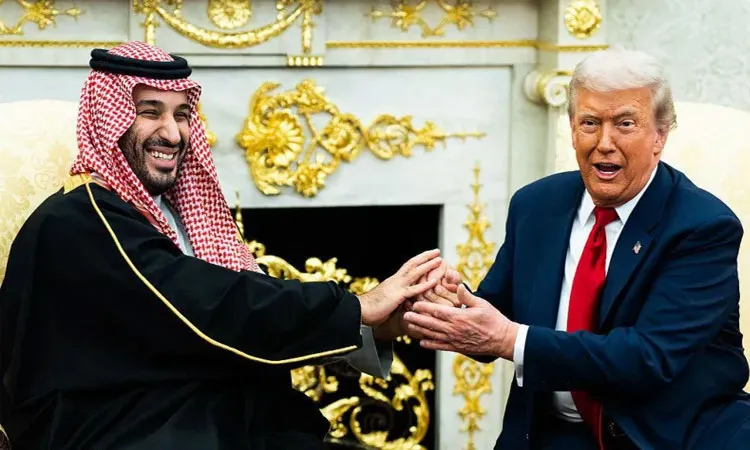
The United States and Saudi Arabia have signed a landmark civilian nuclear cooperation agreement. This deal establishes a multi-billion-dollar partnership granting US companies major access to help develop Saudi Arabia's nuclear energy sector.
While the finalized text remains unpublished reports indicate the agreement could eventually allow Saudi Arabia to enrich uranium on its own soil. This marks a significant shift in US nuclear diplomacy, as Washington has historically never permitted foreign nations to enrich uranium domestically under similar agreements. Enriched uranium is essential for civilian power plants, but it can also be used to build nuclear weapons.
US officials, including Energy Secretary Chris Wright and Secretary of State Marco Rubio strongly defend the pact asserting that it upholds the highest standards of global nonproliferation and nuclear safety. However the deal has raised immediate alarms among nuclear experts and lawmakers. Critics, such as Democratic Senator Edward Markey argue the agreement is reckless and risks sparking a regional arms race with Iran. Highlighting this concern Saudi Crown Prince Mohammed bin Salman stated in 2018 that if Iran develops a nuclear weapon Saudi Arabia will follow suit.
Geopolitically the deal reshapes the Middle East. Notably the US dropped its long-standing condition requiring Saudi Arabia to formally recognize Israel. The agreement also emerges amid reports that rival nations, specifically Russia and China, were discussing similar nuclear pacts with the kingdom.
The agreement now heads to the US Congress for review. Despite Republican control, it is expected to face heavy bipartisan scrutiny over fears of future nuclear proliferation in an increasingly volatile region.