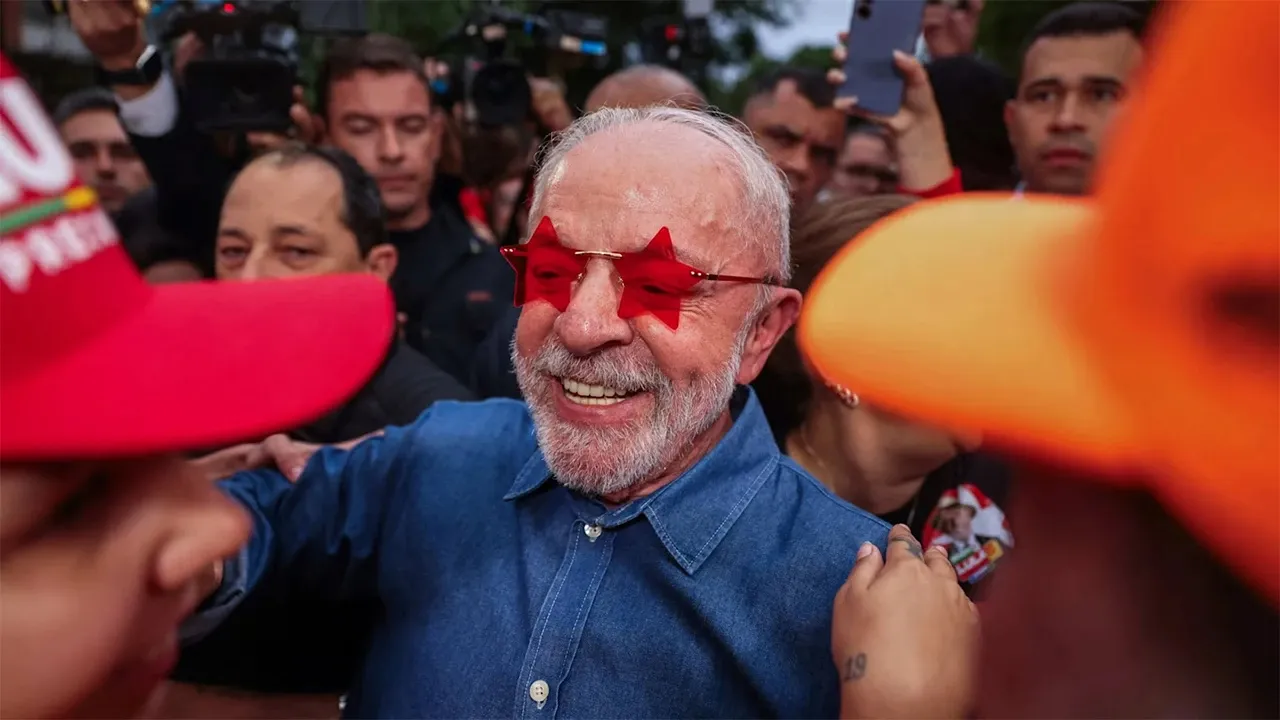
Brazilian President Luiz Inácio Lula da Silva has defeated his rival, Senator Flávio Bolsonaro, in a closely contested presidential runoff, according to the country’s official electoral authority. The victory will give Lula an unprecedented fourth term as president.
Lula secured more than 51% of the vote in the second round held on Sunday, October 25, while Flávio Bolsonaro received around 48%. The narrow margin could further intensify political tensions in the deeply divided country.
Lula, one of the most influential figures on Brazil’s political left, has described several events in his life as miraculous. His latest victory follows a long and eventful political career that began in the metalworkers’ trade union movement and included a period in prison.
He has become the first person in Brazilian history to win the presidency in a runoff after finishing behind in the first round of voting, according to the account of the election.
The path to a fourth term was far from easy. At nearly 81, Lula faced questions about his ability to serve another presidential term. During the campaign, he performed squats and went running to demonstrate that he remained physically fit.
Earlier this month, Lula was initially taken aback after finishing second to Flávio Bolsonaro in the first round. He quickly regrouped and intensified his runoff campaign.
In the final stretch, Lula increased his activity on social media, recording and posting videos of himself. He even bought a mobile phone for the first time, highlighting the challenge of connecting with a population increasingly accustomed to online life and deeply divided politically.
Fourteen years after first becoming president, Lula’s campaign had to adapt to a changed political and social landscape.
His victory keeps Latin America’s largest country firmly under left-wing leadership at a time when several countries across the region are moving towards the political right. US President Donald Trump has also encouraged this broader rightward trend. From poverty to the presidency and prison Lula’s rise from poverty to the presidency, followed by imprisonment and a return to power, has made him one of Brazil’s most consequential political figures. He has played a major role in the country’s politics for more than four decades.
During the first round of campaigning, Lula placed considerable emphasis on his life story and political legacy. Critics, however, argued that he had misjudged what a tired and frustrated Brazilian electorate wanted to hear.
Lula grew up in extreme poverty in Pernambuco, an arid state in northeastern Brazil. He was the seventh of eight children born into a family of illiterate farmers.
As a child, he earned money by shining shoes and selling peanuts. He later became a metalworker and trade union leader. A workplace accident in the 1960s resulted in the loss of one of his fingers.
After losing three consecutive presidential elections, Lula finally entered the presidential palace in Brasília in 2003.
He won re-election in 2006. By the time he left office in 2010, he was widely admired among working-class Brazilians. During his administration, a commodity-driven economic boom helped lift around 30 million people out of poverty.
However, major corruption scandals continued to haunt Lula and his party, fuelling public anger and helping pave the way for Jair Bolsonaro’s election as president in 2018.
Lula had been imprisoned before that election. His convictions were later annulled on procedural grounds, and the judge who presided over the main case was found to have acted with bias.
These developments did not erase the broader political controversy surrounding the corruption scandals, which contributed to lasting polarisation in Brazil.
Divisions deepened during Bolsonaro’s presidency. Lula made a dramatic return to power in 2022, winning by an extremely narrow margin. Achievements and challenges in his third term During his third term, Lula revived social programmes that had been weakened under his predecessor, slowed the destruction of the Amazon rainforest and sought to strengthen Brazil’s democratic institutions.
Nevertheless, he continues to face strong opposition from many voters, including those frustrated by crime and corruption. Lula, a father of five, has also faced criticism over Brazil’s growing public debt.
High interest rates have pushed up the government’s debt-servicing costs, with the government reportedly spending around US$18 billion a month just to pay interest.
Lula was also criticised before the election for moves to increase public spending. These included raising benefits under Bolsa Família, the social assistance programme launched two decades ago that is regarded as one of his most significant political legacies.
Sunday’s unexpected victory surprised and delighted his supporters. Many had feared that a Flávio Bolsonaro presidency could potentially threaten civil rights.