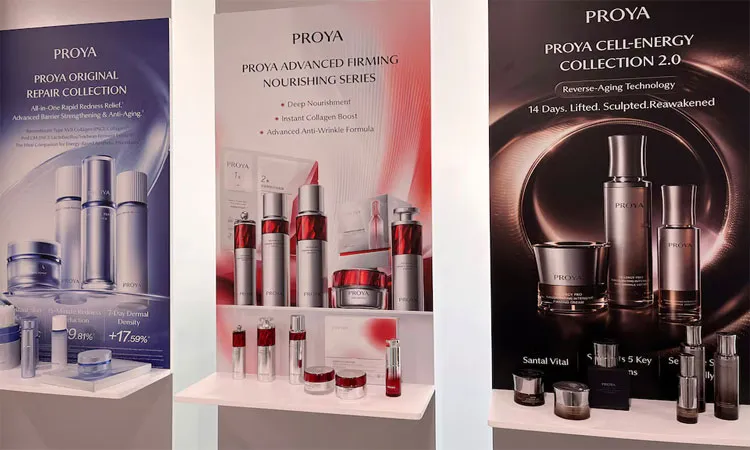
Chinese cosmetics companies are emboldened by dominant market share at home are rapidly expanding into global retail spaces. Fueled by innovative formulations, traditional ingredients and unique packaging, brands like Proya, Florasis and Joy Group are establishing brick-and-mortar and online presences across North America, Europe and Asia.
Proya Cosmetics, China's largest beauty brand by revenue also recently opened a research and development center in Paris and partnered with major US retailer Ulta. Meanwhile, Florasis opened its overseas flagship store in Tokyo while Joy Group brands Judydoll and Joocyee entered markets in Singapore and the United Kingdom.

Domestic success paved the way for this global push. C-beauty brands overtook international competitors in 2022, capturing 57.4% of China’s $159 billion cosmetics market last year. Keen to offset slowing domestic consumer spending, Chinese firms aim to follow the global footprint of Korean beauty (K-beauty) which reached $11.4 billion in exports in 2025.

Industry leaders acknowledge obstacles of low brand awareness in Western markets, competitive pricing pressures and geopolitical trade tensions between Beijing and Washington. Nevertheless, executives remain focused on building long-term international brand trust and expanding into premium global markets.