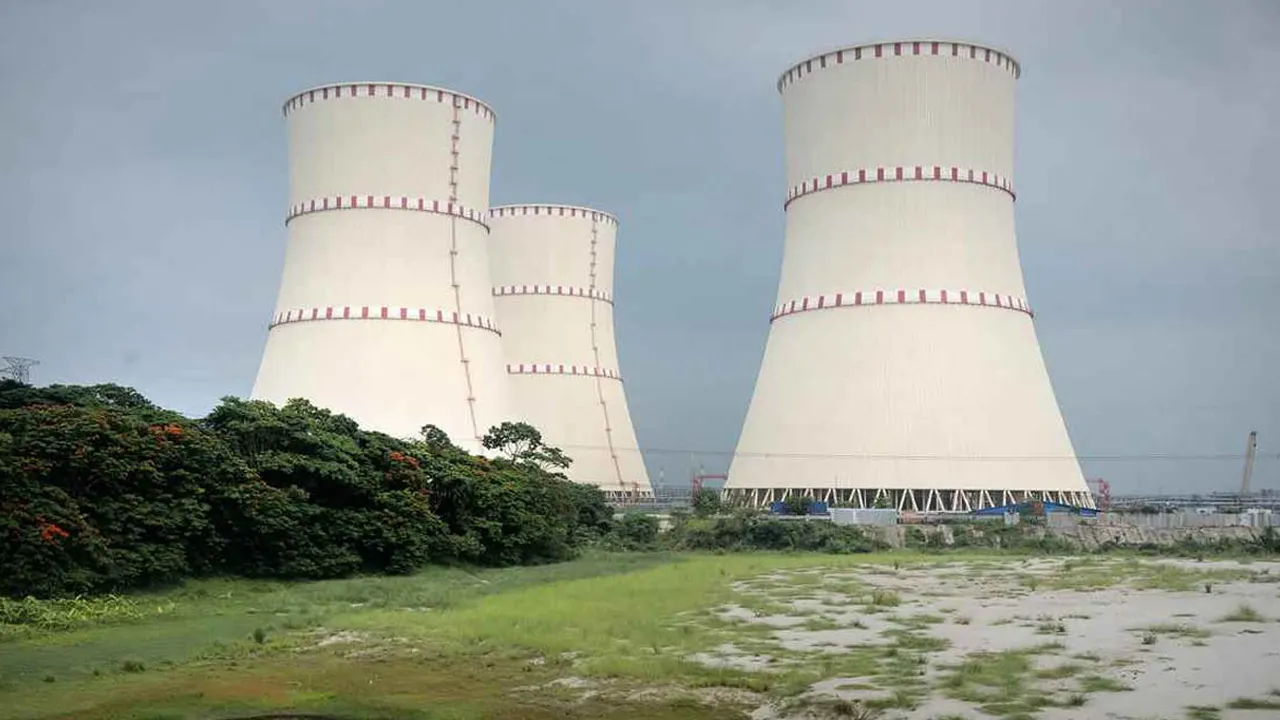
Trial electricity generation has begun at the first unit of the Rooppur Nuclear Power Plant in Pabna, marking a significant step forward for the country's first nuclear power project.
The trial generation process started shortly after 4:30pm on Friday.
A day earlier, the Bangladesh Atomic Energy Regulatory Authority (BAERA) granted approval for the first unit of the plant to begin the power generation process.
At this stage, the reactor will undergo its first self-sustaining chain reaction, known as nuclear fission. The process involves gradually initiating a stable and safe release of energy inside the reactor. All previous tests and examinations have been completed successfully.
According to the guidelines of the International Atomic Energy Agency (IAEA), Stage B1 of the first unit, built with Russian assistance, has been completed with largely successful results. The complications involving the final test of the automatic pressure relief valves have also been resolved.
The next phase, known as B2, involves preparing the nuclear reactor for initial operation. This will be followed by criticality, the stage at which a self-sustaining nuclear chain reaction is established.
Through this process, the reactor will gradually begin producing energy in a stable and controlled manner. Once generation is successfully increased to 300 megawatts, electricity will be supplied to the national transmission grid on a commercial basis.
Meanwhile, Russia has started supplying nuclear fuel for the initial loading of the VVER-1200 reactor at the second unit of the Rooppur Nuclear Power Plant.
Russia's state nuclear corporation Rosatom disclosed the information in a statement issued on Thursday morning.