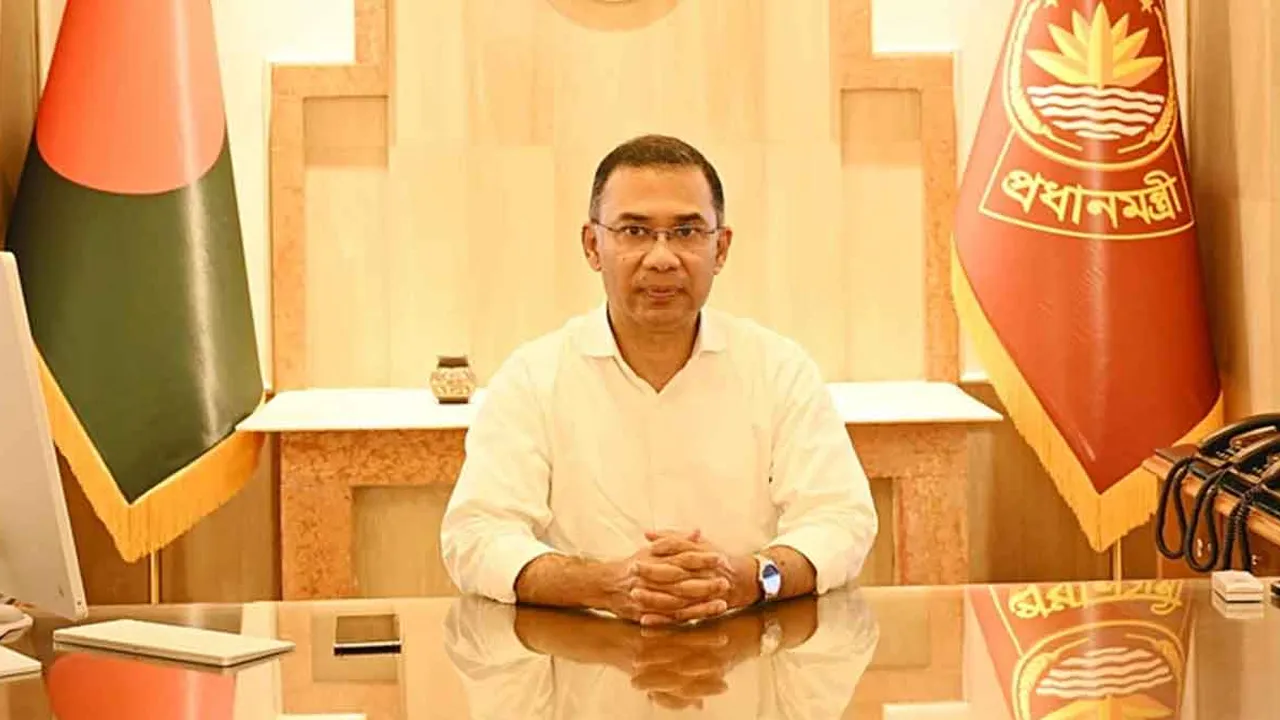
Prime Minister Tarique Rahman has called on young people to play an active role in preventing dengue, protecting the environment and building a cleaner, greener Bangladesh.
“You will run this country in the future. So, work must begin now to build a beautiful, clean and healthy Bangladesh for future generations,” he said.
The prime minister made the remarks on Saturday, October 17, while visiting Government Bangla College in Mirpur, Dhaka, and addressing members of the Bangladesh National Cadet Corps (BNCC) and Scouts.
He said Bangladesh was densely populated relative to its size, particularly in the capital, where a large number of people live. Although keeping such a populous city clean was challenging, he said, it could be achieved through collective efforts.
“When you take part in a cleanliness programme, an area can be cleaned very quickly. But this work cannot be limited to scheduled campaigns. You must also take the initiative yourselves and encourage your friends, relatives and neighbours to maintain cleanliness,” he said.
Highlighting the close link between environmental cleanliness and public health, Tarique said people were more likely to remain healthy when their homes and surroundings were clean, while unhygienic conditions increased the risk of disease.
“If such a large number of people fall ill, it becomes difficult to provide everyone with enough doctors and medicines. Our first task, therefore, is to keep people healthy. To do that, we must keep the environment clean,” he said.
Emphasising dengue prevention, the prime minister said the disease affected many people every year and claimed lives. He identified eliminating mosquito breeding grounds and keeping homes and surrounding areas clean as key measures to prevent dengue.
He said the government was placing particular emphasis on cleanliness activities every Saturday through November as part of its dengue prevention efforts.
“Keep the areas around your homes, schools, colleges, workplaces and other institutions clean. In particular, make sure water does not accumulate anywhere,” he said.
Tarique also urged people to stop dumping rubbish on roads, in canals, rivers and other water bodies. Accumulated waste pollutes the environment and creates favourable conditions for disease-causing organisms and mosquito breeding, he said.
Calling on BNCC cadets and Scouts to raise public awareness, he said they should explain the importance of proper waste disposal to anyone littering in public places and help them dispose of rubbish in designated locations.
“Remember, you are working not only for yourselves but for the benefit of everyone,” he said.
Expressing concern over air pollution in Dhaka, the prime minister said the capital frequently ranked among the world’s most polluted cities. He stressed that protecting the environment and planting more trees were necessary to improve the situation.
Recalling an earlier tree-planting initiative, he said an organisation established in his father’s name had planted around 80,000 neem saplings in Dhaka alone in 2004–05.
“Now you have to surpass me. You should plant even more trees. Inshallah, you can do it,” he told the students.
He also recounted the history of neem trees being planted on Saudi Arabia’s Plain of Arafat. According to the prime minister, the plain was once largely devoid of trees before then-President Ziaur Rahman sent neem saplings there. Neem was selected on the advice of Bangladeshi scientists as suitable for Saudi Arabia’s climate. The trees subsequently spread across the area, where they became known as “Zia trees.”
Citing Japan as an example, Tarique said its streets had very little litter, attributing this not only to cleaning services but also to people’s habit of avoiding littering.
He stressed the importance of keeping rivers, canals and other water bodies clean, urging everyone to act responsibly to prevent environmental and water pollution. People should stop throwing plastic bottles, polythene bags, food packets and other waste indiscriminately, he said.
Concluding his address, the prime minister told BNCC members and Scouts that collective efforts could help build a better Bangladesh.
“The future belongs to you. You will run this country,” he said.