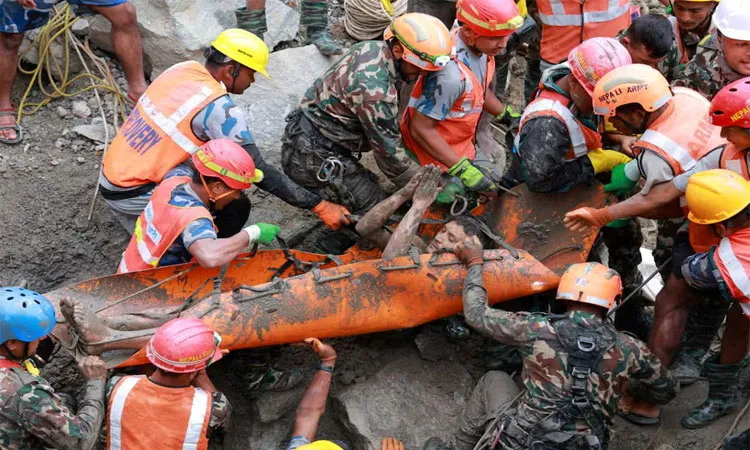
Nepal and China have issued urgent warnings of imminent flooding in the Himalayas after newly formed barrier lakes threatened to burst following Wednesday’s catastrophic glacier collapse that killed at least 362 people.
With nearly 1,000 individuals still missing the authorities are bracing for compounding disasters as trapped water swells dangerously behind fragile debris dams.

The Imminent Threat
China expects 3 million cubic meters of water to surge into a dammed border lake also warning that breach risks will peak around September 1.
Nepal’s disaster authority has ordered residents and rescue teams to evacuate low-lying riverbanks immediately.
Forecasted heavy rainfall over the coming week threatens to accelerate the structural failure of these unstable lakes.

The Initial Catastrophe
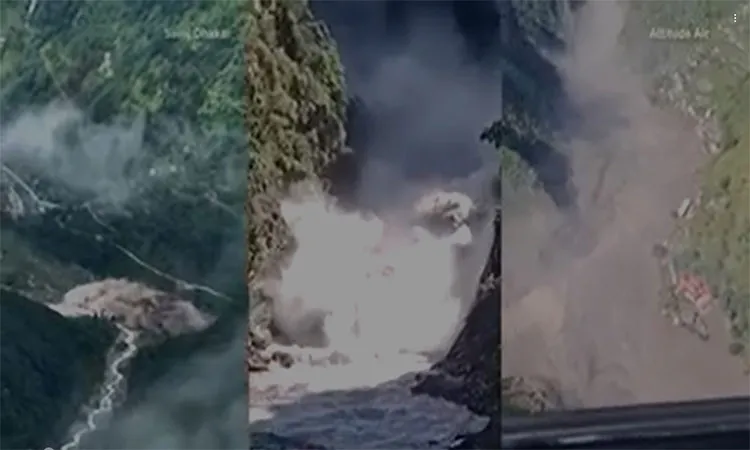
Scientists believe a massive glacier chunk detached with triggering a devastating debris surge that temporarily blocked a river before violently bursting downstream.
River levels surged up to 9 meters (29.5 feet) in just 30 minutes with obliterating vital infrastructure including hydropower dams, roads and bridges.
The event produced a shockwave that researchers likened to an exploding bomb.

Climate Context
The Hindu Kush Himalayan region is warming significantly faster than the global average and driving massive changes in snow cover and permafrost.
Accelerated glacial melting has doubled ice-loss rates since 2000 with creating highly unstable mountain slopes and enlarging hazardous glacial lakes.
Geoscientists warn that these sudden catastrophic cascades represent a "new normal" requiring a drastic overhaul of cross-border early warning systems to protect vulnerable communities.