


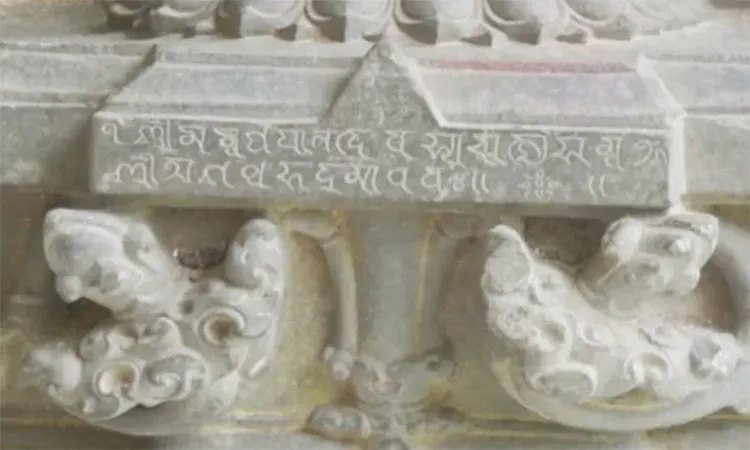
An inscribed Vishnu statue dating to 1,040 AD has been discovered during archaeological excavations at Mahasthangarh in Bogura offering fresh insights into the art with religious patronage and epigraphic practices of the late Pala period.
The statue's date provides an important chronological link to other archaeological remains at the site including massive defensive walls, administrative structures, planned urban facilities, drainage systems, beads and evidence of ancient cottage industries.
Archaeologists say the precise date allows the archaeological layer at Mahasthangarh to be directly correlated with the political and cultural history of the period. It also provides an important absolute date for tracing the evolution of late-Pala sculpture and script.
New evidence of religious patronage
Six other Vishnu statues are currently on display at the Mahasthangarh Museum while several more statues of different sizes and weights are preserved in its storeroom.
The Department of Archaeology considers the newly discovered statue an important historical record of the Barind region. AKM Saifur Rahman, regional director of the Department of Archaeology in Rajshahi, said “The statue is not merely an important addition to our gallery and it is also living evidence of the refined art with religious patronage and active epigraphic practices of the Pala period in the Barind region.”
Researchers say religious art during the Pala period was patronised not only by religious institutions and royal courts but also by affluent members of society. The newly discovered statue may therefore offer a glimpse into the social and religious life of people beyond the royal court.
As scholars continue to explore trade, cultural exchange and the spread of religious ideas in early medieval Bengal, the statue offers a new perspective on the social and religious life of the period. Further study of its inscription, artistic style and archaeological context is expected to shed more light on Mahasthangarh during the Pala era.

