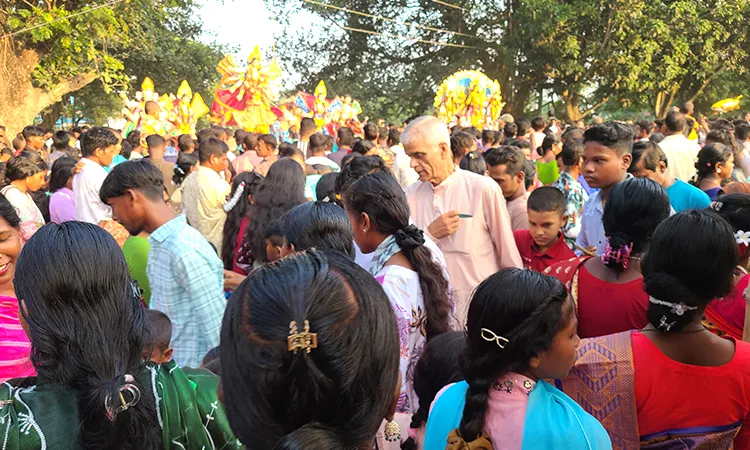
In Phulbari, Dinajpur, the traditional Durga Puja fair established centuries ago by local Rajas and Zamindars was held once again, continuing a legacy that spans a thousand years.
What began during the era of the Rajas and Zamindars has, over the passage of time, evolved into a gathering place for people of all faiths.
Held on the banks of the Shakha Jamuna River in Phulbari, this traditional fair is deeply intertwined with the region’s history, religious sentiments, and the legacy of its rural economy. While some describe it as a centuries-old tradition, the organizers claim its history stretches back a thousand years. Passed down through generations, the fair continues to draw visitors from far and wide.
On Wednesday (October 21), the Durga Puja fair took place on the grounds of Phulbari Government College. The joy of the Durga Puja festival created a vibrant, celebratory atmosphere. People of all ages from Phulbari and surrounding areas arrived to view the idols, shop, and spend time with their loved ones.
According to local history and oral tradition, this region was once home to Hindu Rajas and Zamindars. Each year, they would organize this fair on the banks of the Shakha Jamuna River to coincide with Durga Puja. It is said locally that the fair was strategically organized by the river to allow devotees traveling from distant places to easily reach the site and view the idols of Goddess Durga.
In those days, the fair was not limited to religious observances alone; it also served as a marketplace for household goods and daily necessities. Centered around river-based travel and trade, the fair gradually became a focal point for people of diverse religious backgrounds. To this day, that tradition endures, with people from all walks of life regardless of religion or caste continuing to attend the fair. At the fairgrounds, one can see Durga idols from various nearby puja mandaps arranged in rows. The entire area is bustling with visitors who have come to view the idols and witness the bisarjan (immersion) rituals. Stalls selling shakha (traditional conch-shell bangles), sindoor (vermilion), bracelets, necklaces, and earrings have been set up. There are also collections of books on Hindu religious themes including the Ramayana and Mahabharata alongside children’s toys, sweets, flowers, and seasonal fruits. Additionally, the fair features a variety of traditional rural Bengali delicacies and decorative items for the home. All in all, the fair has become a vibrant hub for shopping and entertainment.
Ananda Kumar Gupta, a prominent businessman and General Secretary of the Phulbari Upazila branch of the Bangladesh Puja Udjapan Parishad notes that this fair embodies a tradition in Phulbari that spans a thousand years. Devotees and visitors from Phulbari and surrounding upazilas flock to the event. Having persisted for so long, this tradition holds special significance for the local community.
Among the visitors is Kafil Uddin, who is over sixty years old. Recalling his childhood, he shares that he first began attending the fair as a young boy, accompanied by his father. Though he has grown older, his affection for the fair remains undiminished, which is why he continues to visit. Like him, people of various faiths from the region have also come to the fair, bringing their children along.
According to the organizers, while the fair is centered around Durga Puja, it is not defined by the presence of any single religious group. Through the participation of people from all faiths, it has long evolved into a universal, inclusive celebration. This gathering, which originated around a religious festival, has become a symbol of social harmony and local tradition.
Meanwhile, police and Ansar personnel have been deployed to ensure the safety of those visiting to view the idols or shop. Furthermore, police patrols are active, and mobile courts are in operation. Phulbari Upazila Executive Officer (UNO) Masum Billah stated that police and Ansar members have been deployed to guarantee the security of the devotees and visitors who have come to the fair to view the idols. Furthermore, police patrols and mobile courts remain in operation to maintain law and order.
There are varying accounts regarding the exact age of this tradition, which dates back to the era of the *rajas* and zamindars. Although the scale and nature of the fair have evolved over time, public interest has not waned. With the joy of the Durga Puja festival, traditional shopping, and the coming together of people from diverse religious and social backgrounds, this fair in Phulbari situated on the banks of the Shakha Jamuna river continues to retain its unique identity.