


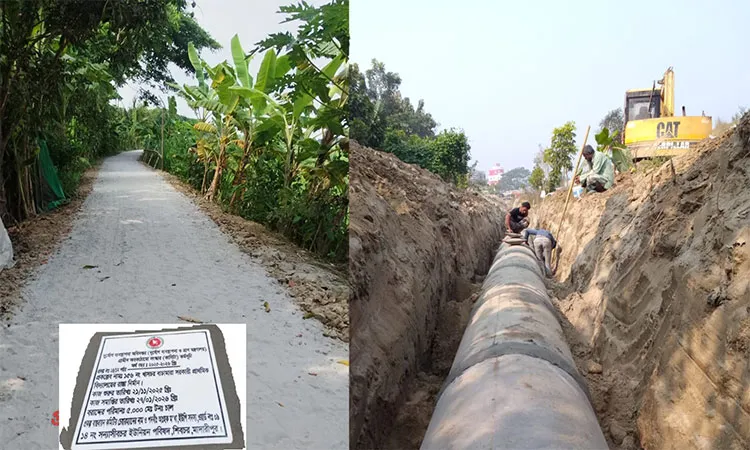
In a first-of-its-kind initiative to ensure transparency in government development projects the Shibchar Upazila Administration in Madaripur has installed information boards displaying project allocation details at every Test Relief (TR), Food for Work (Kabikha) and Cash for Work (Kabita) project site.
The initiative aims to prevent irregularities and corruption in government-funded development works by allowing local residents to easily know how much money has been allocated for projects in their respective areas. According to the Upazila Administration the move has reduced opportunities for malpractice and strengthened accountability.
According to the Upazila Project Implementation Officer's (PIO) office with various development works have been carried out under the TR, Kabikha and Kabita programmes across different unions in the upazila. These include road repairs, earth filling, road improvement, canal excavation and infrastructure development at educational and religious institutions.
At the beginning of project implementation, authorities instructed that an information board be installed at each work site. The boards include the project's name, allocated amount with implementing committee or agency and details of the work. As a result, local residents now have direct access to information about project expenditures and activities.
During the 2025–26 fiscal year 276 TR projects were undertaken in 18 unions against an allocation of Tk 40,856,732. These included 91 road projects, 22 field-filling projects, 2 canal projects and 161 infrastructure development projects for mosques, madrasas, temples and educational institutions.
Under strict supervision by the Upazila Nirbahi Officer (UNO) and the Project Implementation Officer, Tk.756,150 was deducted from several projects due to poor workmanship, incomplete work and the use of substandard bricks. The deducted amount was deposited into the government treasury.
Meanwhile, under the Kabita and Kabikha programmes, 234 projects were implemented in 18 unions against an allocation of Tk 44,148,710 and 536.5834 metric tonnes of food grains. The projects included 206 road projects, 20 field-filling projects and 8 canal projects.
Following inspections by the UNO and the PIO, Tk 2,359,487 and 3 metric tonnes of food grains were recovered from projects found to have defective or incomplete work and the use of low-quality construction materials. The recovered funds and food grains were also returned to the government treasury.
Several local residents said that in the past, ordinary people had little information about government project allocations. With information boards now installed at project sites, they can easily see the allocated budget and compare it with the work being carried out. This has enabled them to question the quality of work and demand accountability from the authorities when necessary.
Local social worker Sanaullah said, "When information about project allocations and planned work is displayed publicly at the work site, ordinary people can also monitor the work. This significantly reduces the scope for irregularities."
Shibchar Upazila Project Implementation Officer Abid Hasan said that people have the right to know where and how government funds are being spent.
"Despite manpower shortages, we ensured the proper use of allocations and maintained the quality of work through strict supervision. Compared to previous years, both the quantity and quality of development work in Shibchar have improved significantly," he said.
Shibchar Upazila Nirbahi Officer H.M. Ibne Mizan said every government-funded project should be open to public scrutiny.
"People should have access to information about every government-funded project. That is why we have given importance to installing information boards at every project site. The administration has conducted regular monitoring to ensure transparency, accountability and quality in project implementation" he said.
He also added that funds from projects with incomplete, defective, or substandard work were deducted and deposited into the government treasury, helping prevent the misuse of public funds and financial losses to the state.

