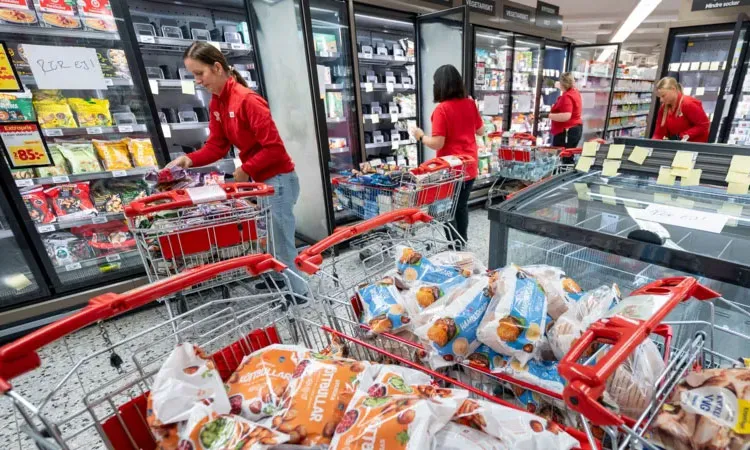
European Union officials have warned of deliberate attempts to disrupt the food supply chain following a series of coordinated cyber-attacks on supermarket refrigeration systems across at least 10 European countries.
The attacks targeted remote temperature control systems, forcing freezer temperatures up to 50°C (122°F) in retail chains across Belgium, Italy, Germany, Ireland, Portugal, Sweden, Finland, Estonia, Luxembourg and the Netherlands. The sudden heat spikes forced stores to discard vast quantities of spoiled frozen food.
No group has yet claimed responsibility for the breaches. However the incidents follow a major cyber-attack three weeks ago that disrupted 700 French grocery stores and causing millions of euros in food losses. EU leaders and national security agencies view the pattern as a potential government-backed hybrid threat against essential infrastructure.
Local impacts varied across the continent:
Belgium & Ireland: Dozens of stores faced major cooling failures, prompting federal investigations.
Italy & Germany: Breaches were linked to outdated security protocols and vulnerabilities at external refrigeration service providers.
United Kingdom: The National Cyber Security Centre (NCSC) alerted British retailers after identifying exploited technology within the domestic food supply chain.
EU Food and Agriculture Commissioner Christophe Hansen confirmed the bloc is treating the threat with urgency. National cybersecurity agencies continue to urge all food supply operators to immediately update software and secure internet-exposed control interfaces.