


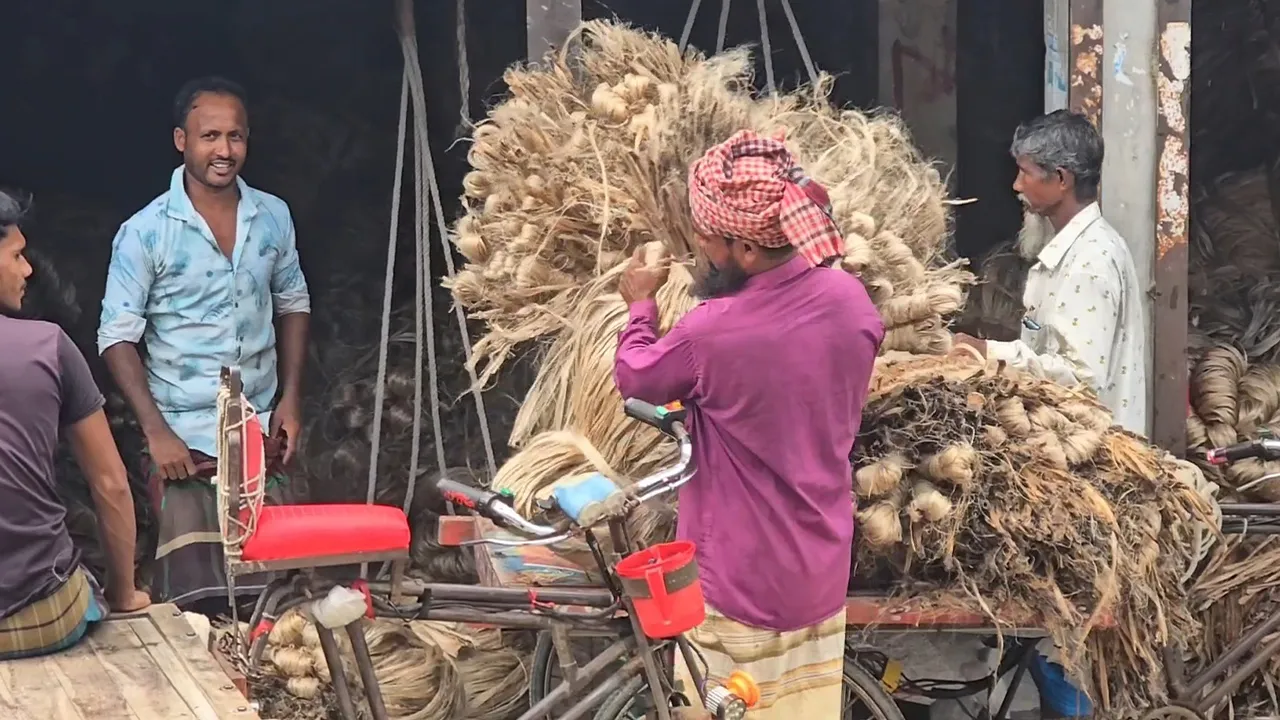
Farmers in Faridpur, one of Bangladesh’s major jute-producing districts, are expecting a strong harvest this season, with cultivation exceeding the official target. However, rising production costs have left growers concerned about whether they will receive a fair price for their crop.
Favourable weather, adequate rainfall and sufficient water in canals and wetlands during the retting period have contributed to good jute yields, colour and fibre quality this year.
The Department of Agricultural Extension expects Faridpur to produce around 196,000 metric tonnes of jute this season.
At the current market price, the crop could generate a market worth around Tk 2,000 crore. However, farmers say higher costs for fertiliser, seeds, labour and other agricultural inputs are putting pressure on their potential profits.
According to the agriculture department, the cultivation target for jute in Faridpur this season was set at 87,328 hectares.
Farmers ultimately cultivated around 87,400 hectares, exceeding the target by approximately 72 hectares.
Jute is currently selling at around Tk 4,000 to Tk 4,200 per maund, depending on variety and quality, at markets including Kanaipur, Naler Mor, Talma, Kadiradi, Satair and Bargas.
According to agricultural officials, if the current market price continues, the total value of this season’s jute production in Faridpur could exceed Tk 2,000 crore.
Faridpur Deputy Director of the Department of Agricultural Extension, agriculturalist Shahduzzaman, said weather conditions were highly favourable for jute cultivation this season.
In particular, adequate water in canals and wetlands during the jute retting period helped improve the colour and quality of the fibre.
“This season’s weather was quite favourable for jute production. In particular, sufficient water in canals and wetlands during the retting period resulted in excellent colour and quality. We expect around 196,000 metric tonnes of jute to be produced in Faridpur this season,” he said.
Despite the good yield and quality, farmers are worried about profitability because of increased production costs.
They said prices of fertiliser, seeds, labour and other agricultural inputs have risen significantly compared with previous years, increasing the cost of producing jute.
Saltha jute farmers Saiful Islam, Nasir Hossain and Anwar Hossain, along with several other growers, said they need more than Tk 4,000 per maund to make a profit.
“The jute yield has been good, but the costs of fertiliser, seeds, labour and other inputs have increased. So, unless we get more than Tk 4,000 per maund, we will not make a profit. Rather, there is a risk of losses,” they said.
Farmers have urged the authorities to take effective measures to ensure a fair price for jute, taking production costs and current market conditions into consideration.
They said a fair price would encourage farmers to continue cultivating jute while helping increase production of the country's traditional cash crop.

