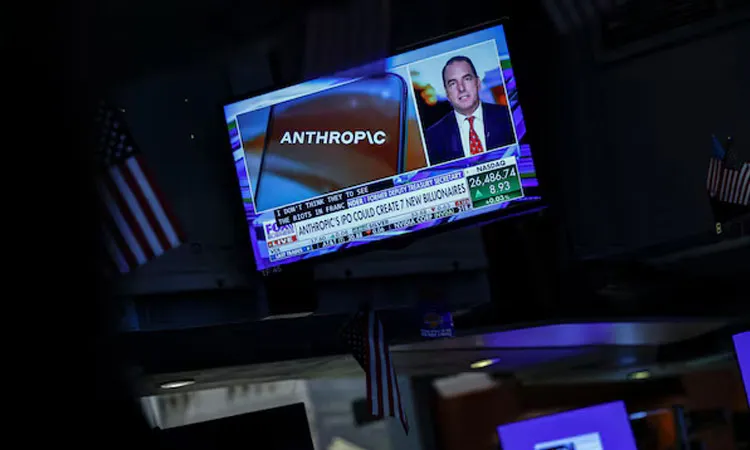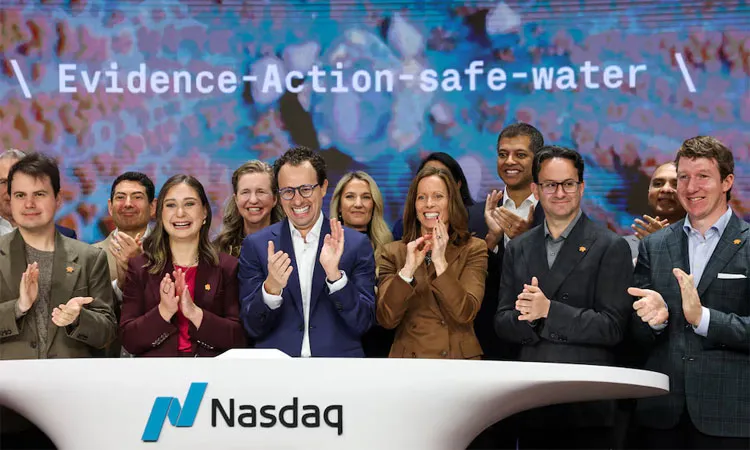
Artificial intelligence startup Anthropic made history on Thursday with the largest initial public offering (IPO) on record with briefly reaching a $2 trillion valuation on the Nasdaq despite growing Wall Street anxiety over an AI spending bubble.
Shares of the San Francisco-based maker of the Claude chatbot opened at $111.50 well above their $83 IPO price before paring gains to close 17% higher at $97.17. Including a $26 billion private placement from tech giants like Microsoft, Google and Nvidia, the six-year-old firm raised over $107 billion, eclipsing SpaceX’s June listing to become the world’s first publicly traded frontier AI company.

The blockbuster debut offered a critical confidence boost for the tech sector following recent turbulence including last week’s resignation of Nvidia CEO Jensen Huang. However the broader market caution lingered as the tech-heavy Nasdaq Composite slipped 2.3% with Alphabet and Amazon both closing lower.

Despite strong investor appetite, Anthropic faces steep financial and regulatory hurdles. The company remains unprofitable under standard accounting rules, carries $6.2 billion in debt and has committed $900 billion to future computing infrastructure including $70 billion over the next 12 months. Analysts warn that such massive capital outlays across the AI industry raise the risk of a financial bubble.
"Bubbles don't burst on the day of the largest deal" said Richard Whittle, an economist at the University of Salford. "They burst later, if the positive future becomes suspect."
Political headwinds are also building. While US President Donald Trump reiterated his opposition to strict federal AI rules on Thursday, newly elected Democrats set to take office in 2027 alongside incoming Democratic governors in Texas and Georgia have vowed to crack down on AI oversight and data center expansion.
CEO Dario Amodei, whose stake alongside six co-founders is now worth nearly $150 billion, sought to balance growth ambitions with safety pledges, stating that Anthropic aims to prove an AI company can prioritize safety and still achieve massive commercial success.