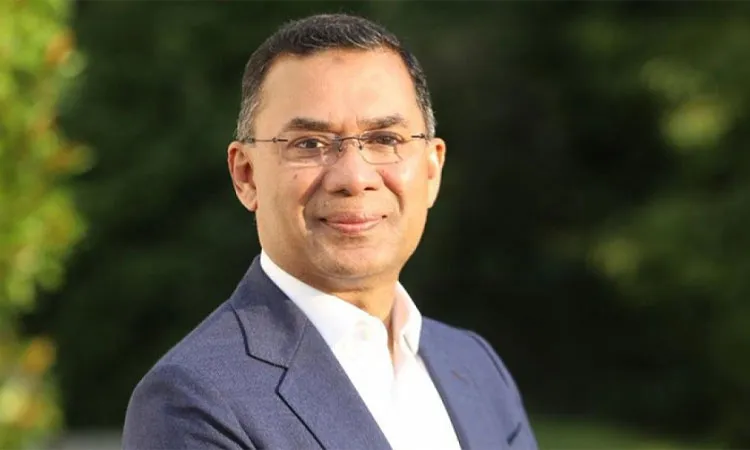
A birthday is a special occasion for personal joy and self-reflection. However, the birthdays of certain individuals transcend personal celebrations and become associated with national aspirations, political assessments and reflections on the future. This is particularly true for individuals whose leadership is closely linked to a country's political trajectory and future. The birthday of Bangladesh's Prime Minister, Tarique Rahman is such an occasion. On this auspicious day, I extend my heartfelt greetings and congratulations to him. I hope that his wisdom, foresight and statesmanlike leadership will take Bangladesh to new heights of development, democracy and prosperity.
Tarique Rahman was born on 20 November 1965. He is the eldest son of Shaheed President Ziaur Rahman the Proclaimer of Bangladesh's Independence and one of the architects of modern Bangladesh and former Prime Minister Begum Khaleda Zia. Both his parents have played significant roles in the political history of Bangladesh. President Ziaur Rahman's political philosophy placed particular emphasis on nationalism, self-reliance, a production-oriented economy and multiparty democracy. Begum Khaleda Zia's political career, on the other hand is distinguished by her experience in democratic movements and governance. This legacy undoubtedly represents a significant historical asset for Tarique Rahman. However, his success as a statesman will depend on his own political wisdom, administrative competence, moral convictions and ability to fulfil the expectations of the people.
Through a long political journey, numerous challenges and the experience of leading his party while living abroad, he eventually assumed the responsibility of Chairman of the Bangladesh Nationalist Party (BNP). His return to Bangladesh on 25 December 2025, after nearly 17 years was a significant event in the country's political landscape. The BNP's securing of a two-thirds majority in the 13th National Parliamentary Election held on 12 February 2026, followed by his swearing-in as Prime Minister on 17 February, marked the beginning of a new chapter in his political career. Consequently, this year's birthday holds special significance in his life. He is now not merely the leader of a political party as the head of government, he is accountable to the entire nation.
The foremost requirement of statesmanlike leadership is the ability to rise above partisan identity and represent the entire nation. Although Tarique Rahman has responsibilities as the Chairman of a political party, his responsibilities as Prime Minister extend far beyond party interests. Ensuring the rights, security and dignity of every citizen, irrespective of political affiliation, religion, ethnicity, class or profession is both his constitutional and moral responsibility. The true success of a head of government is established when he becomes a symbol of trust not only for his supporters but also for people across the political spectrum. We believe that Prime Minister Tarique Rahman possesses this capability.
He has assumed the responsibility of governing the country at a time when Bangladesh is facing longstanding political, administrative and economic challenges. The July-August 2024 mass uprising marked a significant turning point in the country's political history. The sacrifices of students and the general public along with their aspiration for fundamental reforms in the state system, have given rise to a new political reality. In light of this experience, rebuilding democratic institutions, establishing the rule of law and ensuring accountability in the exercise of state power have become pressing national priorities. It goes without saying that the success of democracy is not confined to winning elections. Its true fulfilment lies in upholding democratic values, protecting citizens' rights and ensuring institutional accountability even after elections.
Tolerance and magnanimity towards political opponents are hallmarks of mature democratic leadership. Differences of opinion are a natural feature of democracy. However it is essential to ensure that such differences do not lead to hostility, retaliation or social division. We hope that under Prime Minister Tarique Rahman's leadership, a political culture will emerge in Bangladesh in which political competition will prevail without conflict and criticism will be welcomed without retaliation. Respect and tolerance for opposing views are not signs of weakness in leadership; rather, they demonstrate confidence and political maturity. The Prime Minister has already demonstrated this political maturity.
Ensuring economic stability will also be one of the greatest tests for Prime Minister Tarique Rahman's government. Inherited challenges such as inflation, unemployment, weaknesses in the banking sector, investment uncertainty and energy security continue to place considerable pressure on the economy. Although resolving these challenges will take time, effective policies and strong political commitment can pave the way for recovery. The government must prioritise restoring discipline in the banking sector, controlling non-performing loans, preventing money laundering, creating an investment-friendly environment and expanding productive employment opportunities. At the same time, stabilising the prices of essential commodities, strengthening social safety nets and reducing income inequality are equally important. The government has already taken effective initiatives in these areas. However, the ultimate objective of economic reforms should be to ensure that their benefits are not confined to any particular group but are reflected in an improved quality of life for ordinary citizens.
Bangladesh's large youth population is one of the country's greatest assets. To harness this demographic potential, young people must be transformed into skilled, creative and technology-oriented human resources. With the rapid expansion of artificial intelligence, robotics, automation and the digital economy, the nature of employment is changing rapidly across the world. Therefore, transforming the conventional education system into one that is employment-oriented, research-driven and technologically advanced is imperative. The BNP's election manifesto included commitments to youth employment, the creation of approximately one million jobs in the information technology sector, skills-based training and merit-based recruitment. Implementing these commitments is of paramount importance. Universities must also be transformed into centres of research and innovation, while technical and vocational education should be expanded. Education should not merely serve as a means of obtaining certificates; rather, it should become a key instrument for enhancing individual capabilities and national productivity. This is one of the most important expectations of the present time.
Prioritising national interests over partisan and personal interests, curbing corruption, reforming public administration, and improving law and order will be crucial conditions for the success of his government. Effective initiatives are also needed to strengthen the rural economy, agriculture, healthcare services and social safety net programmes. In particular, government commitments must translate into tangible improvements in the lives of marginalised communities, equitable distribution of public resources and access to essential services for all citizens.
Political stability and social harmony are indispensable for national progress. Bangladesh's political history has long been marked by divisions and mutual distrust. Overcoming this situation requires building political consensus on issues of national importance. Similarly, national interests, sovereignty and dignity must remain the highest priorities in foreign policy. Effective diplomatic initiatives are needed to develop relations with neighbouring countries on the basis of equality and mutual respect, expand regional cooperation, increase international trade, ensure energy security and pursue a sustainable solution to the Rohingya crisis. Bangladesh's foreign policy should be cooperative and balanced, yet firm and uncompromising whenever national interests are at stake. This is also where the true significance of Tarique Rahman's policy of "Bangladesh First" lies.
Forming a government through the people's mandate is an important achievement for any political leadership. However, a leader's enduring place in history is determined by the success of governance and contributions to public welfare. A government can achieve lasting historical success through the fulfilment of electoral pledges, strengthening democratic institutions, establishing good governance, controlling corruption, creating employment opportunities and ensuring the security and dignity of citizens. Tarique Rahman has that opportunity before him today. We hope that under his leadership, a new chapter will begin in Bangladesh's political history where national unity will prevail over division, tolerance over retaliation and national interests over partisan and vested interests. We aspire to see a Bangladesh where democracy is institutionalised, the economy is inclusive, education is life-oriented, and public administration is accountable.
Once again, I extend my heartfelt greetings and congratulations to Prime Minister Tarique Rahman on his birthday. I wish him good health, longevity and every success. I hope that through a combination of wisdom, foresight, magnanimity and a strong sense of responsibility, he will set such an exemplary standard in governance that future generations will regard his leadership as an outstanding model of statesmanship.

The Author: Professor Dr. Mohammad Siddiqur Rahman Khan, Vice-Chancellor, Bangladesh Open University.