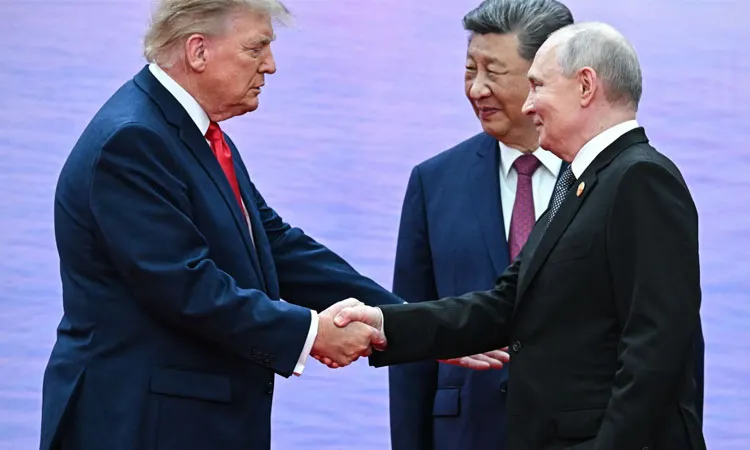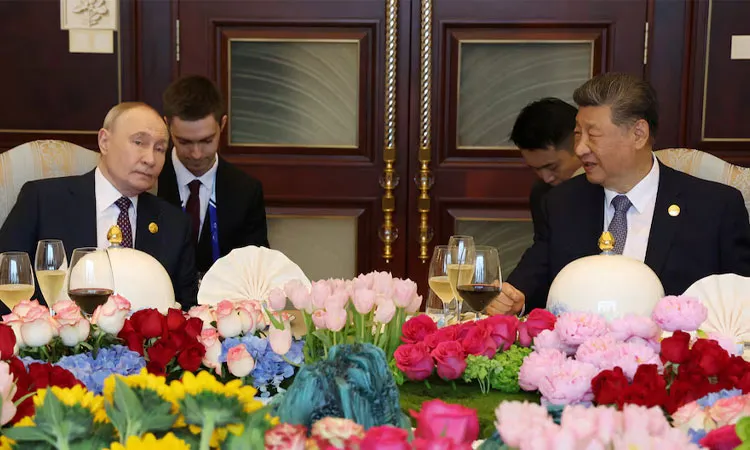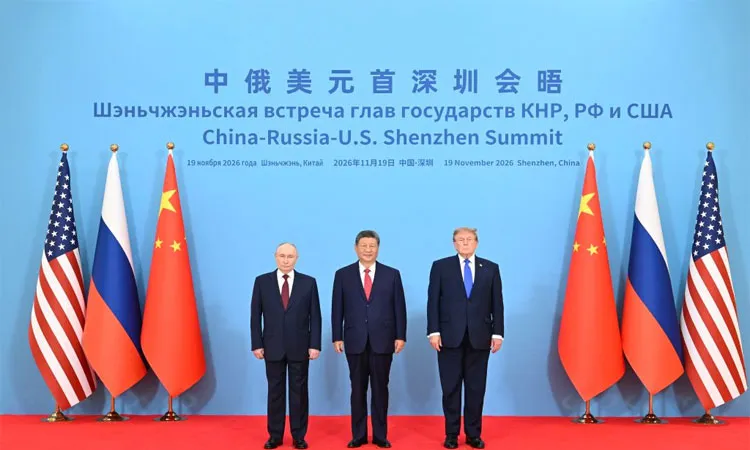
US President Donald Trump, Chinese President Xi Jinping and Russian President Vladimir Putin issued a symbolic “peace declaration” following an unprecedented trilateral summit in southern China on Thursday though the leaders stopped short of launching formal nuclear arms control talks.
In a joint statement, the three powers reaffirmed that a nuclear war “cannot be won and must never be fought” and pledged to hold future dialogue on reducing nuclear risks. However the agreement set no timeline and omitted negotiations on a trilateral nuclear arms reduction treaty also a key priority for Trump that Beijing has resisted due to its smaller arsenal.

Speaking aboard Air Force One en route to Washington, Trump acknowledged that limiting nuclear weapons is “psychologically” difficult for world leaders, noting it is hard to persuade nations with thousands of warheads to give them up though he vowed to keep pushing the issue.

The summit in Shenzhen capped Trump’s three-day Asian tour following his Republican Party’s loss of Congress in recent midterm elections. While the leaders pledged to support United Nations reforms, boost global fuel supplies, and uphold state officials' immunity from international courts with a notable inclusion given the International Criminal Court’s arrest warrant for Putin also the declaration avoided mentioning Russia’s war in Ukraine or the US conflict with Iran.
Trump hailed the meeting as “bigger than Yalta” defending his warm greeting of Putin as a “friend.” However the optics drew sharp rebukes. US Senate Democratic Leader Charles Schumer called the summit a “historic embarrassment” while European leaders meeting in Berlin warned against deciding Ukraine’s fate without European involvement.
Analysts noted that while Trump gained a high-profile diplomatic spectacle, Putin emerged as the clearest winner also breaking out of Western isolation onto the global stage alongside Washington and Beijing.