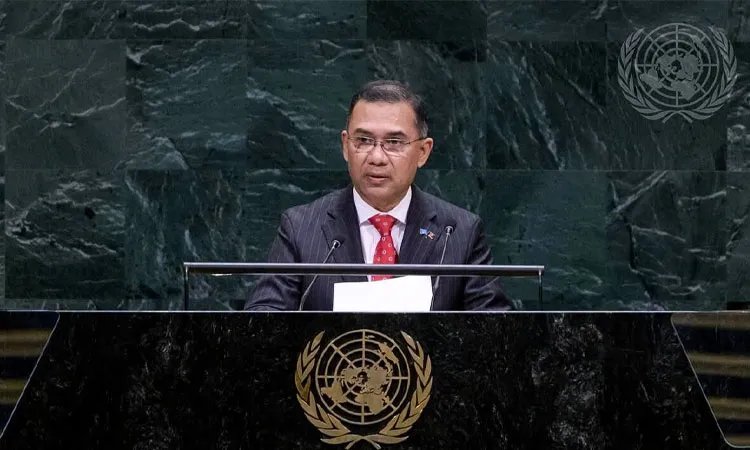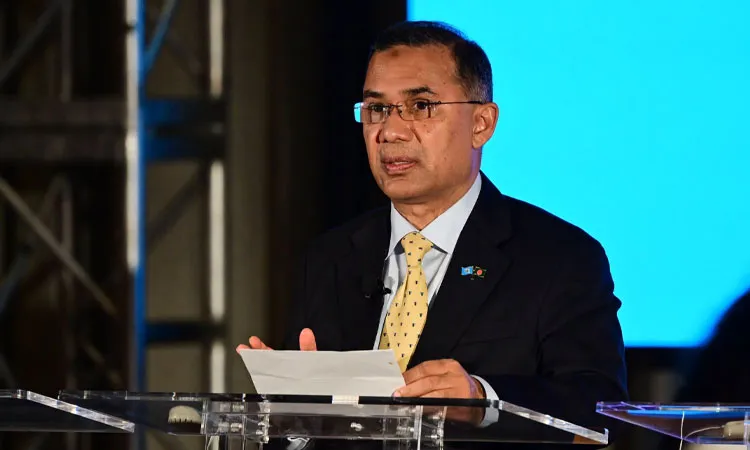
Addressing the 81st session of the United Nations General Assembly on Thursday the Nepali Prime Minister Balendra Shah called for urgent and grant-based international assistance following a devastating glacier collapse that killed over 1,450 people and left more than 6,000 missing.
Estimating recovery costs at nearly 10% of Nepal's GDP, Shah insisted that climate-vulnerable nations must not be burdened with debt to rebuild from disasters they did not cause.
"When a climate-driven disaster destroys infrastructure in a poor country, the answer cannot simply be another mega loan" Shah said with noting Nepal produces under 0.1% of global greenhouse emissions. "We need adequate grant-based support from the world."
The August 26 disaster triggered a massive flash flood that tore through mountain valleys, destroying vital roads, schools and hydropower facilities.
To address escalating risks across fragile Himalayan ecosystems, Shah proposed the creation of a "Himalaya Climate Resilience Mechanism" among Nepal, India and China. The initiative aims to share real-time satellite data with monitor volatile glacial lakes, upgrade cross-border early-warning systems and coordinate rapid emergency responses.
While the World Bank has approved up to $170 million in emergency financing, Shah urged major polluters to fulfill climate justice promises through non-repayable grants also rehabilitation and long-term resilience financing.