


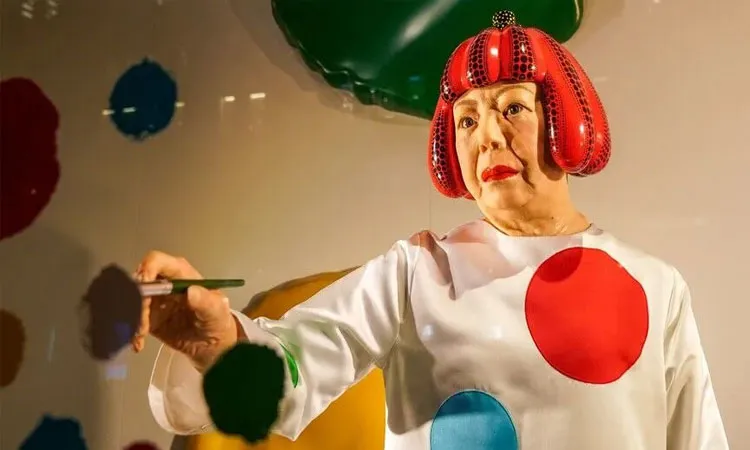
Japanese avant-garde artist Yayoi Kusama is known worldwide as the "polka dot queen" died on August 14 at a hospital in Tokyo from multiple organ failure as her studio confirmed Thursday. She was 97.
With a career spanning more than six decades, Kusama was celebrated for her signature polka-dot imagery the giant pumpkin sculptures and immersive "Infinity Mirror Rooms" kaleidoscopic installations that gained massive popularity on social media in recent years. She remained one of the world's most commercially successful artists with her paintings regularly selling for millions of dollars at auction.

Born in Nagano Prefecture in 1929, Kusama moved to the United States in 1957 and later settled in New York with becoming a key figure in the 1960s avant-garde movement. She returned to Japan in 1973 and continued producing art from a studio near the psychiatric facility where she lived for much of her later life.

Kusama represented Japan at the 1993 Venice Biennale and held a major exhibition at New York's Museum of Modern Art in 1998. Her other celebrated works include the pumpkin sculpture on Naoshima Island in the Seto Inland Sea and "Phantom Flowers" at the Matsumoto City Museum of Art.

In recognition of her contributions to art in France awarded her the Order of Arts and Letters in 2003 and Japan honored her with the Order of the Rising Sun, Gold Rays with Rosette in 2006. She later received Japan's Order of Culture in 2016.

Her studio said Kusama continued painting until her final days also vowing to "carry forward Kusama's wishes" and continue inspiring people through her art.

