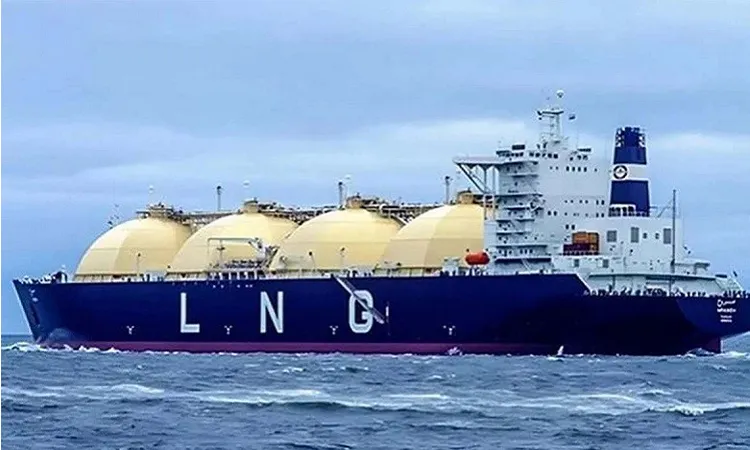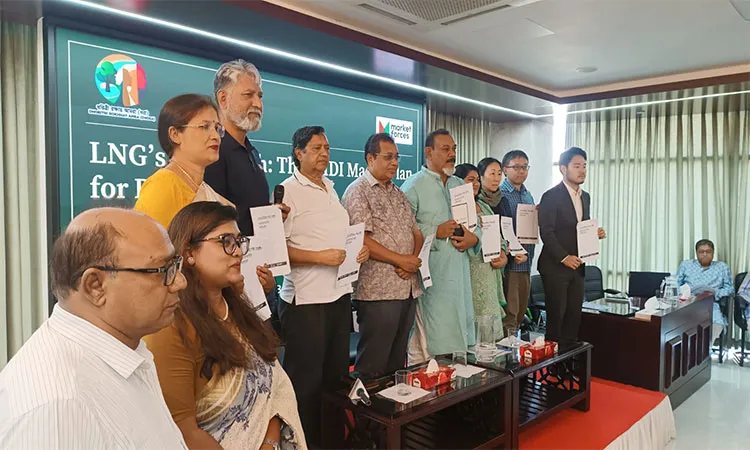
Bangladesh’s annual expenditure on liquefied natural gas (LNG) imports could surge to $25.8 billion by 2040 also posing severe economic risks, according to a new study released in Cox’s Bazar on Saturday.
Titled "LNG’s Last Gasp: Bangladesh’s Mega Master Plan," the report by international energy research group Market Forces warns that expanding fossil-fuel infrastructure in Matarbari will trap the country in costly long-term fuel imports. The report was jointly launched by Dhoritri Rokkhay Amra (DHARA), Waterkeepers Bangladesh and Market Forces.

Under the Maheshkhali-Matarbari Integrated Infrastructure Development Initiative (MIDI), plans are underway to build 13,000 megawatts of new gas-based power plants costing $19 billion, alongside a $1 billion land-based LNG terminal. However, researchers warn that fueling these plants will require importing roughly 25 million tonnes of LNG annually by 2040 costing $10.3 billion under low market prices, $15.8 billion at moderate rates and up to $25.8 billion if global prices spike.
Speaking at the launch, Market Forces Asia Energy Transition Director Munira Chowdhury and Waterkeepers Bangladesh Coordinator Sharif Jamil noted that declining domestic gas reserves and volatile global markets such as during the Russia-Ukraine war expose Bangladesh’s power and industrial sectors to major supply shocks. The study also scrutinized the role of Japanese financiers and corporations including JICA and JBIC in backing the plan.
Beyond financial liabilities, the report highlighted environmental and social costs, noting that the Matarbari-1 coal plant has already disrupted the livelihoods of at least 20,000 local salt farmers and fishers. Projected fossil-fuel expansions could also emit over one billion tonnes of greenhouse gases.
To ensure true energy security, the report urges policymakers to prioritize industrial rooftop solar, battery storage and grid upgrades instead of expanding import-dependent LNG infrastructure.