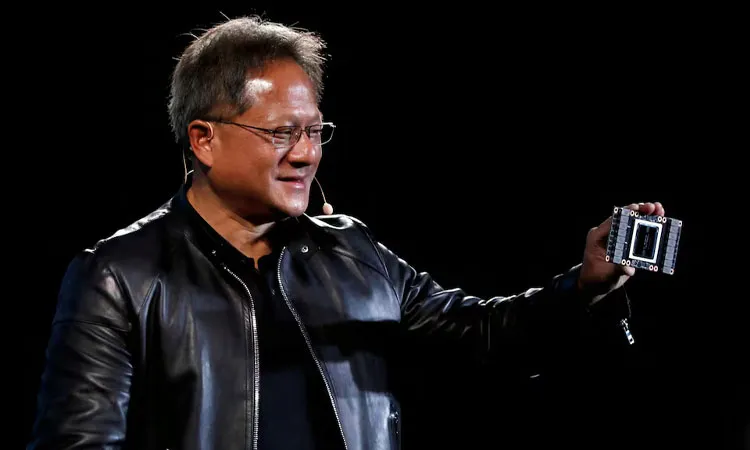
Jensen Huang returned as chief executive of Nvidia on Monday and less than two weeks after resigning over revelations of extramarital affairs of one with an alleged Chinese spy.
Addressing cheering employees at Nvidia’s headquarters the 63-year-old co-founder vowed to be "a better CEO the second time around." Following the announcement, Nvidia shares surged 31.5%, driving a broader Wall Street rally and lifting AI-linked stocks such as CoreWeave and Nebius.
Huang’s swift reinstatement was backed by US President Donald Trump, who praised Huang as a "genius" who "did nothing wrong" and was welcomed by tech leader Elon Musk. However the US lawmakers from both parties strongly objected to the move.
As a central figure in the global artificial intelligence boom, Huang’s influence spans Washington, global supply chains and major tech firms. Tech leaders including Musk and Oracle Chairman Larry Ellison have previously described competing intensely to secure Nvidia’s graphics processing units (GPUs).
Despite the market rebound, Huang’s comeback highlights corporate governance risks regarding Nvidia’s heavy reliance on a single leader. Corporate governance experts noted that when an executive becomes "too big to fire" boards face pressure to establish stricter oversight. Huang owns roughly 3.6% of Nvidia without special voting shares, yet oversees around 60 direct engineering reports.
His return also revives Wall Street scrutiny over Nvidia’s financial practices. Analysts have previously warned that investing billions into AI startups that subsequently buy Nvidia chips creates a risky cycle of circular financing a claim Huang has rejected also maintaining the company is supporting genuine market demand.