Two spacecraft flying together under the $2 billion BepiColombo mission have entered orbit around Mercury after an eight-year journey with marking a major milestone for European and Japanese space exploration.
The European Space Agency (ESA) confirmed that the mission achieved orbital capture around the solar system’s smallest and innermost planet on Saturday, November 21. On Sunday, mission controllers noted that a software glitch had shortened the thruster burn during the maneuver though the spacecraft remains safe while engineers in Germany investigate.
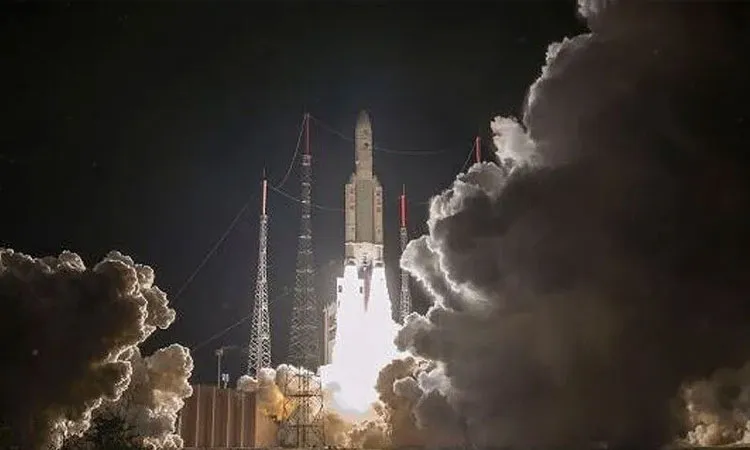
Launched from French Guiana in October 2018, BepiColombo used nine planetary flybys one of Earth, two of Venus and six of Mercury to slow down enough to be captured by Mercury's gravity against the Sun’s powerful pull.
The joint mission pairs ESA’s Mercury Planetary Orbiter with the Japan Aerospace Exploration Agency’s Mercury Magnetospheric Orbiter, known as Mio. Currently attached, the two probes are scheduled to separate between December 9 and 10 to study Mercury simultaneously from separate orbits a first in planetary exploration.
ESA’s orbiter will map the planet's surface and interior while Mio will examine its magnetic field and surrounding space environment. Scientists aim to uncover insights into Mercury’s unusually large iron core, magnetic origins and water ice deposits trapped inside shadowed polar craters.
Following further orbital adjustments and instrument checks, full scientific operations are set to begin in April 2027. BepiColombo is only the second mission to orbit Mercury following NASA’s MESSENGER spacecraft which operated there from 2011 to 2015.