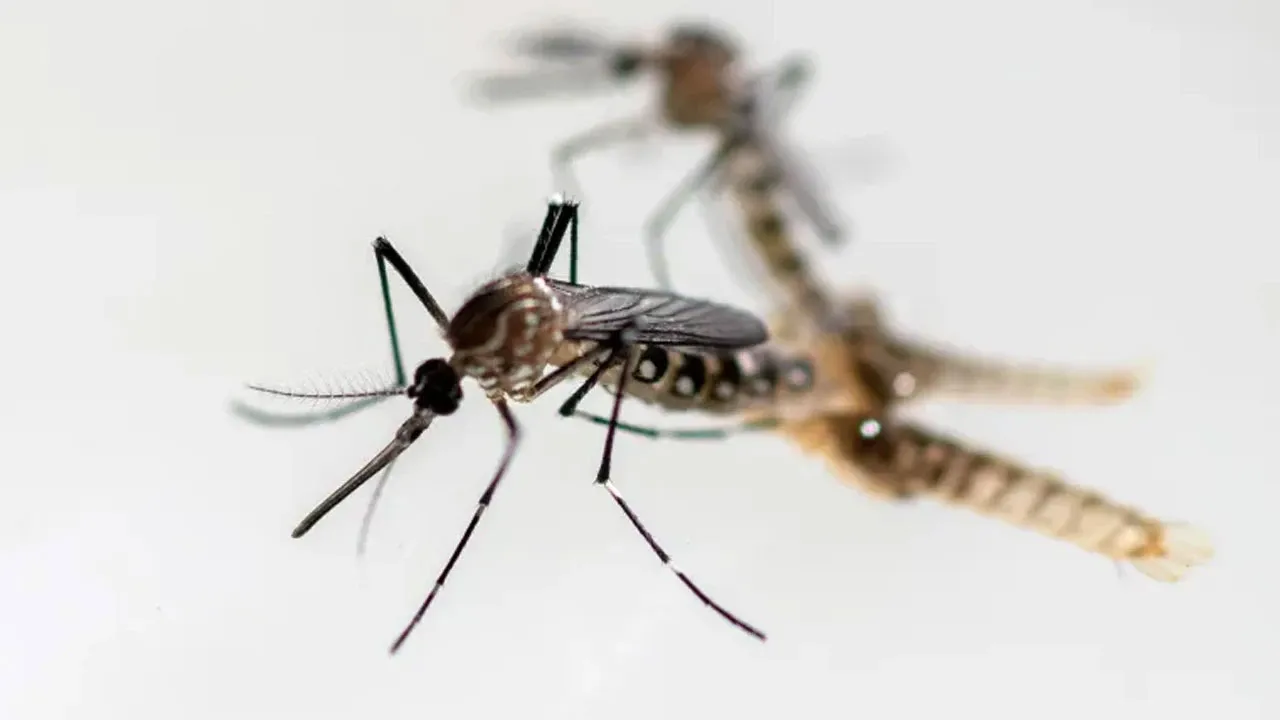
Scientists in Brazil have successfully tested an innovative approach to combating dengue by infecting mosquitoes with a naturally occurring bacterium that makes it harder for viruses to multiply inside them, rather than killing the insects or trying to prevent mosquito bites.
The large-scale study, involving thousands of children, found that dengue infections fell by 68.5% in areas where mosquitoes carrying the bacterium Wolbachia were released. Chikungunya infections also declined by 73.3%.
Researchers presented the encouraging findings at an international scientific conference. The results offer fresh hope for countries struggling with dengue outbreaks, including Brazil, which is among the nations most heavily affected by the disease.
The research comes as Florida in the United States is also dealing with a dengue outbreak believed to be among the country's largest since the 1940s.
David Hamer, a global health expert at Boston University who was not involved in the Brazilian study, described the findings as exciting in comments to the Associated Press (AP). He said wider use of Wolbachia-carrying mosquitoes could substantially reduce dengue transmission in many parts of the world. How Did the Wolbachia Mosquito Study Work? An international research team involving Brazil's Ministry of Health, Emory University, Yale University and the US National Institute of Allergy and Infectious Diseases conducted the study in Belo Horizonte, a city in southeastern Brazil, between 2020 and 2024.
The scientists introduced the naturally occurring bacterium Wolbachia into Aedes aegypti mosquitoes. The bacterium is harmless to humans but can significantly reduce mosquitoes' ability to transmit certain viruses.
Although Wolbachia naturally occurs in around 50% of insect species, Aedes aegypti mosquitoes generally do not carry it. These mosquitoes are responsible for spreading dengue, chikungunya, Zika and yellow fever.
After releasing millions of Wolbachia-carrying mosquitoes, researchers randomly selected 5,700 children and tested them for symptoms of dengue.
The participants included children living in areas where the modified mosquitoes had been released, as well as those from areas where conventional mosquito-control measures, such as insecticide spraying, were used.
Researchers also conducted tests for various diseases transmitted by mosquitoes, ticks and sand flies to identify infections that might not have produced noticeable symptoms. Dengue Infections Drop Significantly in Test Areas Blood tests conducted regularly in areas where Wolbachia-carrying mosquitoes were released showed a positive rate of just 4%. In comparison, the rate was 14% in areas where conventional mosquito-control methods were used.
The study recorded a 68.5% reduction in dengue infections and a 73.3% decline in chikungunya infections.
Brazil accounts for approximately one-tenth of dengue cases worldwide, making the findings particularly significant for the country.
The research was conducted in densely populated Belo Horizonte during a period of particularly severe dengue transmission. Researchers consider the results further evidence of the potential effectiveness of the Wolbachia approach.
The findings were presented at a meeting of the American Society of Tropical Medicine and Hygiene in Maryland, United States. Wolbachia Mosquito Releases Are Not New The use of Wolbachia for mosquito control is not a new concept. The World Mosquito Program (WMP) has been pioneering the approach through its ongoing Wolbachia mosquito release projects since the mid-2000s.
Its initiatives have covered several locations, including Colombia's Aburrá Valley and the Brazilian city of Niterói, with a combined population of approximately 4.5 million.
According to information published by the organisation, dengue infections fell by 92% among nearly one million people included in its research.
Scientists say the Wolbachia approach can become self-sustaining over time and is more environmentally friendly than conventional insecticide spraying, which can be both expensive and toxic.
Singapore has also been implementing a Wolbachia-related mosquito population control programme since 2016.
Under this approach, authorities release male mosquitoes carrying Wolbachia into the environment. When these males mate with wild female mosquitoes, the resulting eggs do not hatch, helping reduce the mosquito population. Scientists Aim to Establish Wolbachia-Carrying Mosquito Populations A major objective of these programmes is to establish self-sustaining populations of Wolbachia-carrying mosquitoes in targeted areas.
As part of its initiatives, the World Mosquito Program has worked with local community leaders to gain public participation and support.
Depending on the location, researchers either release adult mosquitoes or distribute their eggs in takeaway food containers containing materials that provide suitable conditions for hatching.
The eggs are expected to develop into adult mosquitoes and mix with the existing local population. Over time, scientists hope the Wolbachia-carrying mosquitoes will become established in the environment and reproduce naturally. Mosquitoes Also Being Studied for Malaria Prevention Beyond dengue control, scientists are exploring ways to use mosquitoes to help prevent other mosquito-borne diseases, including malaria.
Female Anopheles mosquitoes transmit malaria, a potentially fatal disease that remains widespread in several African countries. Children and pregnant women are among those at greatest risk.
In 2024, researchers from Leiden University Medical Center and Radboud University in the Netherlands developed mosquitoes capable of delivering a modified form of a malaria parasite designed to stimulate immunity against the disease.
The researchers used a modified version of Plasmodium falciparum, the parasite responsible for the deadliest form of malaria in humans.
When an infected mosquito bites a person, it pierces the skin with its needle-like mouthpart and releases saliva into the bloodstream before drawing blood. The saliva contains substances that prevent blood clotting and reduce the sensation of pain.
Parasites transmitted through the bite can travel to the liver, where they multiply before moving on to infect red blood cells and cause malaria.
In the experimental approach, researchers sought to replicate the natural infection process in a controlled way to stimulate a stronger immune response in the liver.
Although 80% of participants in one group developed an immune response, the trial involved only 20 people. Researchers therefore considered the study too small to establish that the approach would work reliably across the wider population.
Scientists involved in the research also said it remains unclear whether the method would provide longer-lasting protection than conventional vaccines.
US researchers conducted a similar small-scale experiment in 2022 involving 26 participants and found the approach to be 50% effective.
Meanwhile, Japanese scientists modified mosquitoes in 2010 to carry a vaccine against leishmaniasis, a parasitic disease usually transmitted by sand flies.
Mice bitten by these mosquitoes, described as "flying vaccinators", developed antibodies against the parasite, offering another example of how mosquitoes could potentially be used in disease prevention.