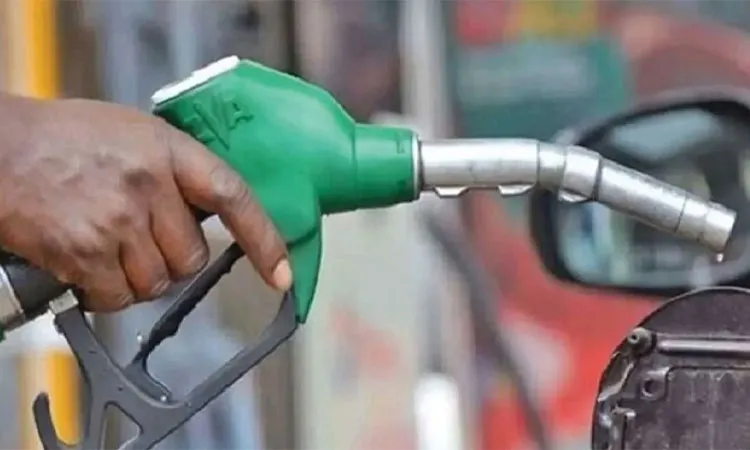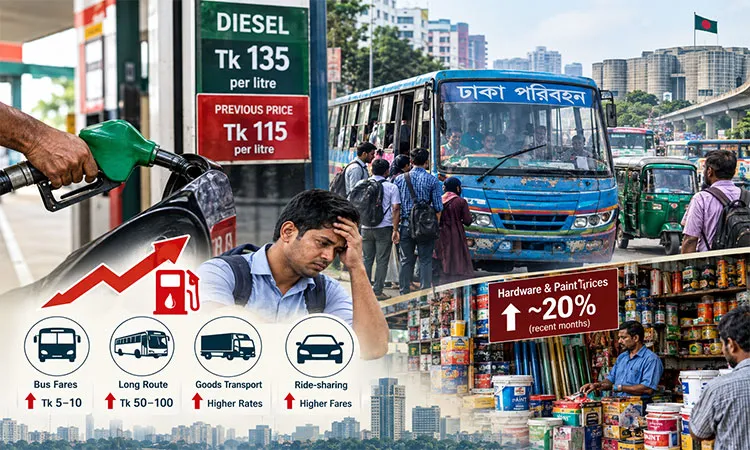
The government’s sudden decision to hike fuel prices by Tk.20 per litre has immediately hit the pockets of everyday Bangladeshis. From Dhaka's busy streets to the hardware markets in Jashore, the ripple effects are already making daily life much harder.
On Monday morning the commuters across the capital woke up to instant transport fare hikes. Local buses and legunas on routes connecting Chittagong Road, Signboard, Jatrabari and Gulistan started charging Tk.5 to Tk.10 extra. For long-distance travelers heading to Khulna, Barishal or Chattogram, ticket prices have quietly jumped by Tk.50 to Tk.100.
The biggest issue right now? The Bangladesh Road Transport Authority (BRTA) hasn't officially updated the fare chart yet. This delay is sparking heated and unnecessary arguments between frustrated passengers and bus conductors.
Transport owners argue they are in a tight spot and can't wait for official approval. With diesel jumping from Tk.115 to Tk.135 a litre—the highest in our history operating a standard 45-seater bus now costs around Tk.571 more per 100 kilometers. Owners claim that without an immediate fare bump also keeping buses on the road is impossible.
But ordinary passengers aren't buying the excuses. Commuters point out a bitter local truth: when oil prices drop globally, bus fares in Bangladesh never seem to come down but they instantly spike when fuel gets pricier. For low-wage earners, paying an extra Tk.10 to Tk.20 daily completely breaks their monthly budgets.
The pain isn't limited to public transport. Ride-sharing drivers, truckers and pickup vans are already demanding higher rates to cover their fuel costs though many fear losing customers as a result.
Even the hardware and construction markets are bracing for impact. In places like Jashore the traders report that paint and hardware tools have already shot up by 20% over the last few months due to the ongoing dollar crisis. With freight trucks now raising their delivery charges, shop owners fear prices will go up again, driving away middle-class buyers.
Right now BRTA and the government need to step in quickly to regulate these fares. Leaving the transport sector unchecked is only punishing the common people whose incomes simply aren't growing fast enough to survive this skyrocketing inflation.