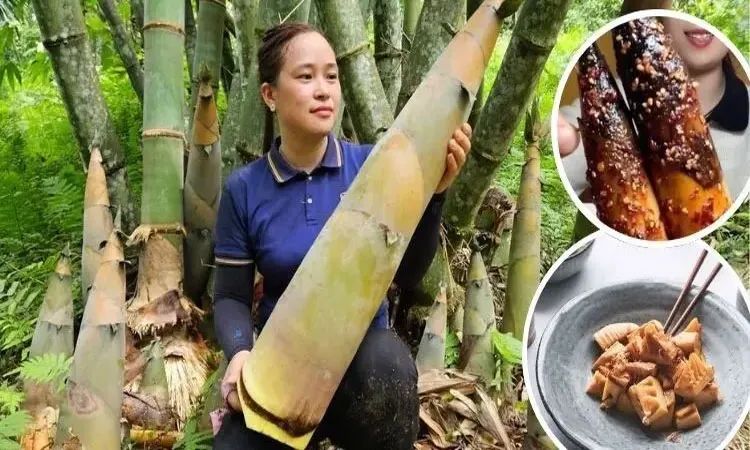
In Bangladesh the bamboo typically brings to mind rural fences, scaffolding or handcrafted baskets. However, beyond its structural uses, bamboo is a cherished culinary ingredient across many Asian countries including parts of our own.
The Edible Shoots
The mature bamboo wood is not edible. Culinary uses are restricted to the young, tender shoots collected before they harden. Instead of being eaten raw, these shoots are boiled, fried, made into soups or fermented. Cooking and fermentation not only preserve the shoots but also unlock uniquely earthy flavors and a satisfying crunch.

A Global Delicacy
The tradition of eating bamboo shoots spans centuries. In China, both fresh and dried shoots are widely used in stir-fries and noodles. In Japan, they are known as Takenoko (children of bamboo) and are celebrated as a seasonal spring delicacy. Across Southeast Asia from Thailand's spicy curries to Indonesia, where it is known as Rebung, bamboo is a beloved vegetable.
Similarly in Northeast India, states like Assam, Nagaland and Tripura have a rich culinary tradition of pairing fresh or fermented bamboo shoots with meat and fish.
The Bangladeshi Context
While not common in mainstream Bengali cuisine, bamboo shoots are a traditional staple for the indigenous communities in the Chittagong Hill Tracts (CHT). Locals expertly forage young shoots to cook with vegetables, fish or meat and frequently ferment them to create distinctively flavored regional dishes.

Nutrition and Crucial Safety Warnings
Bamboo shoots are a healthy addition to a balanced diet, offering dietary fiber, proteins, vitamins and minerals.
However, a critical safety warning applies the bamboo shoots must never be eaten raw. Certain species contain cyanogenic glycosides, natural compounds that can release toxic cyanide into the digestive system. Properly cleaning, boiling and processing the shoots neutralizes these harmful toxins. It is always best to follow traditional, local methods for preparing and identifying edible bamboo species.
From an eco-friendly building material to a kitchen delicacy, bamboo proves to be remarkably versatile. Its presence on the dinner plate highlights a deep also generation-spanning connection between nature and local food cultures.