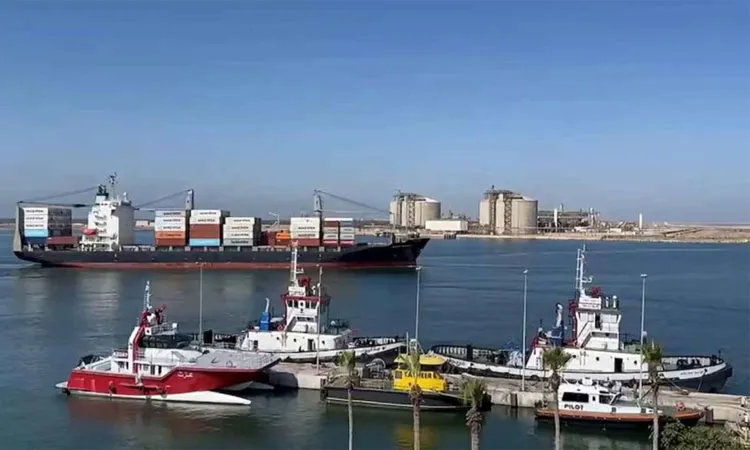
An unidentified drone strike on two gas vessels at Egypt’s Damietta port has escalated threats to global shipping through the Suez Canal. The attack hit the US-owned tanker Energos Winter igniting a fire that subsequently spread to a second vessel.
This incident exposes growing vulnerabilities in global energy security. With the expanding five-month-old US-Iran war bringing traffic through the Strait of Hormuz to a near standstill the Suez Canal and the SUMED pipeline have become vital export lifelines for Saudi Arabian oil.
Iran has strongly denied involvement in the Damietta strike, with Foreign Minister Abbas Araqchi warning the region against "false-flag operations". However regional shipping threats are rapidly multiplying. Iran-aligned Houthi rebels recently declared a maritime embargo against Saudi Arabia prompting London's marine insurance market to expand its "high risk" zone in the Red Sea. In response Saudi Arabia announced plans to form a multinational maritime defense coalition to protect international energy supply routes.
The conflict is increasingly drawing in neighboring nations. In a major escalation, US and Saudi forces recently launched joint airstrikes against Iran-aligned groups in eastern Iraq retaliating against alleged Houthi drone attacks launched from Iraqi soil. The Iraqi government stated it had no prior knowledge of these strikes.
Amid the rising violence diplomatic efforts remain fragile. Oman has proposed a plan backed by Gulf states to manage the Strait of Hormuz and while publicly rejected by Tehran Iranian officials indicate talks are still ongoing. As attacks in Egypt and Iraq threaten to engulf the broader Middle East international shipping and energy markets face unprecedented volatility.