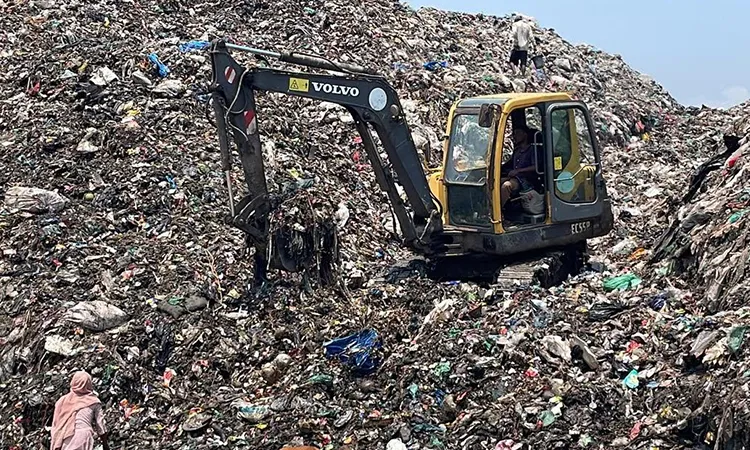
A 50-foot mountain of untreated waste at Kasturaghat on the banks of the Bankkhali River is triggering a severe environmental and public health emergency in Cox's Bazar. For over two decades the municipality has dumped 70 to 90 tons of waste daily—including household garbage hotel refuse and hazardous medical waste—directly into this open site.
The environmental toll is staggering. Toxic leachate flows into the Bankkhali River and eventually the Bay of Bengal threatening marine biodiversity. The surrounding air is heavily polluted with methane and hydrogen sulfide, while heavy metals like lead and cadmium are contaminating the water supply. Cox's Bazar Sadar Hospital reports a sharp rise in waterborne diseases chronic bronchitis and skin infections in the area.
"We cannot sleep because of the unbearable stench" said Monowara Begum, a local resident. "Our children are constantly sick and our pleas to the municipality are ignored."
Despite High Court directives and the Environment Conservation Act 1995 the dumping continues. Advocate Arup Barua Tapu called the unauthorized dumping a "punishable offense" while local Bangladesh Paribesh Andolon (BAPA) secretary Nazrul Islam described the site as an "environmental time bomb."
Cox's Bazar Municipality CEO Mohammad Adnan Chowdhury attributed the crisis to the lack of a modern dumping station over the past three decades, adding that a sustainable waste management project is currently being drafted. However Civil Surgeon Dr. Mohammad Saber warned that without immediate intervention prolonged exposure will drastically increase the risk of infectious diseases like typhoid and hepatitis.
Experts are urging the immediate cessation of open dumping at Kasturaghat the establishment of a modern sanitary landfill and strict segregation of medical waste to prevent the coastal city’s ecosystem from total collapse.